Author: V. Dimov, M.D., Allergist/Immunologist and Assistant Professor at University of Chicago
Reviewer: S. Randhawa, M.D., Allergist/Immunologist and Assistant Professor at NSU
What is Eosinophilic Esophagitis (EoE)?
Eosinophilic (ee-uh-sin-uh-fil-ik) esophagitis (EoE) is an inflammation of the esophagus. Esophagus is the tube that sends food from the mouth to the stomach. The inflammation in EoE is made of a lot of orange-colored cells calles eosinophils, giving the name of the condition, eosinophilic esophagitis
How do I know if I have Eosinophilic Esophagitis (EoE)?
The most common symptom of EoE in older children and adults is difficulty swallowing solid foods, a feeling like a food is “stuck” in the esophagus. Sometimes, patients complain of pain. Vomiting is another common symptoms. This is due to inflammation of the esophagus.
In children, EoE symptoms can include poor growth, weight loss, a poor appetite or even refusing to eat.
What causes Eosinophilic Esophagitis (EoE)?
The leading cause of eosinophilic esophagitis is an allergy or a sensitivity to particular proteins found in foods, called allergens.
People of all ages can be affected by eosinophilic esophagitis. They have a large number of eosinophils - a type of white blood cell that is normally found in small numbers in the blood - in the wall of the esophagus (inflammation). A large number of eosinophils in the esophagus may result from a food allergy reaction, acid reflux, or airborne allergens, which can contribute to inflammation, or injury to the esophageal tissue.
Many people with EoE have a personal of family history of allergic disorders such as asthma, alergic rhinitis, atopic dermatitis or food allergy.
50% of patients with eosinophilic esophagitis have seasonal allergies or asthma. Many others also have food allergies or eczema. Some patients note a seasonal flare up of the condition, typically in the spring and in the summer.
How to diagnose Eosinophilic Esophagitis (EoE)?
You need to see 3 different specialists for optimal management of EoE:
- an allergist
- a gastroenterologist (GI)
- a nutritionist
An allergist will determine the role that allergies may play in EE. Your allergist will perform allergy testing to diagnose which specific allergens may be involved with your EoE. This is done with skin testing, blood testing, or both.
In order to diagnose EoE for sure, a gastroenterologist will perform an upper endoscopy (EGD) and a biopsy of the esophagus. This is usually done after medications to control acid reflux have failed to improve symptoms.
A nutritionist will help you choose an eliminations diet that will help your esophagus to heal.
What is the treatment for Eosinophilic Esophagitis (EoE)?
If the food allergy testing shows sensitizations, counseling is provided on foods to avoid. Food-related reactions may not be immediate, and in this case the skin test and blood tests may be negative. Some patients may find that the esophagus becomes inflamed by an offending food days or weeks after eating it. Dietary changes can improve the symptoms of eosinophilic esophagitis.
Medications may suppress eosinophil accumulation, relieve damage to the tissue in the esophagus, and alleviate symptoms.
Swallowed oral topical steroids are very effective. These are the same medications used for asthma (budesonide, Pulmicort) but instead of inhaling them, a patient with EoE will mix the liqued with thickening agent such as Splenda and swallow it twice a day.
Patients with eosinophilic esophagitis should work closely with an allergist, a gastroenterologist, and a nutritionist to find a treatment plan that works best for them.
Video: Learn about eosinophilic gastrointestinal disorders from Gus the esophaGUS! Video by the American Partnership for Eosinophilic Disorders (apfed.org):
Published: 02/28/2012
Updated: 04/23/2012
Showing posts with label Patient Info. Show all posts
Showing posts with label Patient Info. Show all posts

Sinusitis - patient information
Author: V. Dimov, M.D., Allergist/Immunologist and Assistant Professor at University of Chicago
Reviewer: S. Randhawa, M.D., Allergist/Immunologist and Assistant Professor at NSU
What are sinuses?
Sinuses are empty cavities within your cheek bones, around your eyes and behind your nose. You have 4 sinuses on each side of your head. There is a large sinus under your eye and another above your eye on each side. If you drop a line between your ears and another line down the center of your face, where those lines intersect is another sinus (sphenoid sinus). Then, connecting all three of these sinuses is what is called the ethmoid sinus, which is more of a labyrinth - like an egg-cartonlike group of sinuses.
What is sinusitis?
If your stuffy nose and cough last longer than 10 days, you may have more than a cold. Rhinosinusitis is a swelling of your nasal sinuses. It is often called sinusitis or a sinus infection.
How do I know if I have sinusitis?
You may experience any of the following:
- pressure around your nose, eyes or forehead
- stuffy nose
- thick, yellow or green drainage from your nose
- bad-tasting post-nasal drip
- cough
- head congestion, ear fullness or a headache
- toothache, tiredness and, occasionally, fever
Types and Causes of Sinusitis
Acute sinusitis refers to sinusitis symptoms that last less than 4 weeks. Most acute sinusitis starts as a regular cold from the common cold viruses and then becomes a bacterial infection.
Chronic sinusitis is when symptoms last 3 months or longer (more than 12 weeks). The cause of chronic sinusitis is a combination of swelling and infection. A CT scan can help to see if you have sinusitis or not.
Recurrent sinusitis occurs when 3 or more acute episodes happen in a year.
What are the risk factors for chronic sinusitis?
Allergic rhinitis
Allergic rhinitis puts you at risk for developing sinusitis because allergies can cause swelling of the nasal mucosa and blockage of the sinuses. This blockage prevents the sinuses from draining, and increases the risk of developing infection (bacterial sinusitis).
If your skin test is positive for allergies, your allergist can prescribe medications to control the swelling such as nose spray This can reduce your risk of developing an infection.
Immunodeficiency
Immune problems may decrease your ability to fight infections. Such problems include low levels of immunoglobulins (IgG, IgM, IgA), also called antibodies. Some patients have low level of antibodies to a common bacteria called Pneumococcus. This may lead to chronic or recurrent sinusitis.
A board-certified allergist can test quickly and reliably for both allergies and immunodeficiency.
Anatomical problems
Problems with the structure of your nose - such as narrow nasal or sinus passages, tumors or a shifted (deviated) nasal septum can also cause sinusitis. A CT scan can show such anatomocal problems. Surgery is sometimes needed to correct them.
Many patients with recurring or chronic sinusitis have more than one factor that puts them at risk of infection.
Diagnosis of sinusitis
To diagnose sinusitis, an allergist may order the following tests:
- allergy skin testing (blood testing is an alternative)
- antibody levels for IgG, IgM, IgA, and pneumococcal serotypes, complete blood count
- CT scan of the sinuses
Your physician may also perform an endoscopic examination. This involves inserting a narrow, flexible endoscope (a device with a light attached) into the nasal cavity through the nostrils after local anesthesia.
Treatment of sinusitis
Sinusitis requires a mix of treatments. You may need a medication to reduce nasal blockage and control allergies, which helps keep the sinus passages open such as steroid nasal spray.
If bacterial sinusitis is present, you will need an antibiotic.
For people with allergies, long-term treatment such as allergy shots can control allergic symptoms and prevent sinusitis.
Several non-drug treatments can also be helpful. These includes sinus rinses with distilled salty water.
Some patients may need surgery to correct the structure of your nose by an otorhinolaryngologist, or an ear-nose-throat physician (ENT).
References
Experts Discuss the Causes of Sinusitis. NYTimes, 2012.
Sinusitis. AAAAI.
Published: 02/28/2012
Updated: 03/18/2012
Reviewer: S. Randhawa, M.D., Allergist/Immunologist and Assistant Professor at NSU
What are sinuses?
Sinuses are empty cavities within your cheek bones, around your eyes and behind your nose. You have 4 sinuses on each side of your head. There is a large sinus under your eye and another above your eye on each side. If you drop a line between your ears and another line down the center of your face, where those lines intersect is another sinus (sphenoid sinus). Then, connecting all three of these sinuses is what is called the ethmoid sinus, which is more of a labyrinth - like an egg-cartonlike group of sinuses.
What is sinusitis?
If your stuffy nose and cough last longer than 10 days, you may have more than a cold. Rhinosinusitis is a swelling of your nasal sinuses. It is often called sinusitis or a sinus infection.
How do I know if I have sinusitis?
You may experience any of the following:
- pressure around your nose, eyes or forehead
- stuffy nose
- thick, yellow or green drainage from your nose
- bad-tasting post-nasal drip
- cough
- head congestion, ear fullness or a headache
- toothache, tiredness and, occasionally, fever
Types and Causes of Sinusitis
Acute sinusitis refers to sinusitis symptoms that last less than 4 weeks. Most acute sinusitis starts as a regular cold from the common cold viruses and then becomes a bacterial infection.
Chronic sinusitis is when symptoms last 3 months or longer (more than 12 weeks). The cause of chronic sinusitis is a combination of swelling and infection. A CT scan can help to see if you have sinusitis or not.
Recurrent sinusitis occurs when 3 or more acute episodes happen in a year.
What are the risk factors for chronic sinusitis?
Allergic rhinitis
Allergic rhinitis puts you at risk for developing sinusitis because allergies can cause swelling of the nasal mucosa and blockage of the sinuses. This blockage prevents the sinuses from draining, and increases the risk of developing infection (bacterial sinusitis).
If your skin test is positive for allergies, your allergist can prescribe medications to control the swelling such as nose spray This can reduce your risk of developing an infection.
Immunodeficiency
Immune problems may decrease your ability to fight infections. Such problems include low levels of immunoglobulins (IgG, IgM, IgA), also called antibodies. Some patients have low level of antibodies to a common bacteria called Pneumococcus. This may lead to chronic or recurrent sinusitis.
A board-certified allergist can test quickly and reliably for both allergies and immunodeficiency.
Anatomical problems
Problems with the structure of your nose - such as narrow nasal or sinus passages, tumors or a shifted (deviated) nasal septum can also cause sinusitis. A CT scan can show such anatomocal problems. Surgery is sometimes needed to correct them.
Many patients with recurring or chronic sinusitis have more than one factor that puts them at risk of infection.
Diagnosis of sinusitis
To diagnose sinusitis, an allergist may order the following tests:
- allergy skin testing (blood testing is an alternative)
- antibody levels for IgG, IgM, IgA, and pneumococcal serotypes, complete blood count
- CT scan of the sinuses
Your physician may also perform an endoscopic examination. This involves inserting a narrow, flexible endoscope (a device with a light attached) into the nasal cavity through the nostrils after local anesthesia.
Treatment of sinusitis
Sinusitis requires a mix of treatments. You may need a medication to reduce nasal blockage and control allergies, which helps keep the sinus passages open such as steroid nasal spray.
If bacterial sinusitis is present, you will need an antibiotic.
For people with allergies, long-term treatment such as allergy shots can control allergic symptoms and prevent sinusitis.
Several non-drug treatments can also be helpful. These includes sinus rinses with distilled salty water.
Some patients may need surgery to correct the structure of your nose by an otorhinolaryngologist, or an ear-nose-throat physician (ENT).
References
Experts Discuss the Causes of Sinusitis. NYTimes, 2012.
Sinusitis. AAAAI.
Published: 02/28/2012
Updated: 03/18/2012
Atopic dermatitis (eczema) - patient information
Author: V. Dimov, M.D., Allergist/Immunologist and Assistant Professor at University of Chicago
Reviewer: S. Randhawa, M.D., Allergist/Immunologist and Assistant Professor at NSU
What is atopic dermatitis (eczema)?
Atopic dermatitis (eczema) is a common skin rash that often affects the face, elbows and knees, especially in younger children. This red, scaly, itchy rash is more common in young infants and those who have a personal or family history of allergy.
What triggers atopic dermatitis flare-ups?
Common triggers include aeroallergens like cat dander or house dust, overheating or sweating, and contact with irritants like wool or soaps. Dust mite, more than foods, is the major cause of allergic atopic dermatitis.
For some patients, usually children, certain foods can also trigger eczema. Skin staphyloccus ("staph") infections or carrier status can cause a flare-up in children as well. Eczema patients usually have very dry skin and allergic shiners (an extra crease, called a Dennie's line) across their lower eyelids. They are also more at risk for other skin infections.
In older individuals, emotional stress can cause a flare-up.
Prevention of atopic dermatitis (eczema)
Preventing the eczema itch is the main goal of treatment. Do not scratch or rub your rash. Applying cold compresses and creams or ointments is helpful. Also remove all irritants that aggravate your condition from your environment.
If a food is identified as the cause, it must be eliminated from your diet.
Treatment of atopic dermatitis (eczema)
The maintenance daily treatment consist of bathing daily for 10 minutes in lukewarm water until the skin is "pruny".
Avoid soap. It is best to use non-soap cleansers. They usually do not contain sodium lauryl sulfate (SLS), a chemical that creates soap’s foaming action and can dry and irritate skin. Non-soap cleansers include Dove Sensitive Skin Unscented Beauty Bar, Aquaphor Gentle Wash, Aveeno Advanced Care Wash, Basis Sensitive Skin Bar, CeraVe Hydrating Cleanser, and Cetaphil Gentle Cleansing Bar.
Follow the bath immediately with liberal use of moisturizers. A simple regimen is to use Eucerin in the morning (less greasy) and Aquaphor in the evening.
Topical steroid cream medications and topical calcineurin inhibitors are most effective in treating any rash that you can feel with your hand. Hydrocortisone 1% is the first topical steroid to try (available over the counter). For more severe flare-ups, your doctor will prescribe a stronger topical steroid such as triamcinolone 0.1%.
Antihistamines are recommended to help relieve the itching. In severe cases, oral corticosteroids are also prescribed.
If a skin staph infection or colonization is suspected to be a trigger for your eczema flare-up, antibiotics are recommended for 2 weeks, followed by diluted bleach baths once or twice a week.
Atopic Dermatitis Treatment - Illustrated (click to enlarge the image):

References
Atopic dermatitis (eczema)
Allergic Skin Conditions. AAAAI.
Skin Care Tips for Individuals with Atopic Dermatitis (Eczema). AAAAI.
Published: 11/28/2011
Updated: 06/08/2012
Reviewer: S. Randhawa, M.D., Allergist/Immunologist and Assistant Professor at NSU
What is atopic dermatitis (eczema)?
Atopic dermatitis (eczema) is a common skin rash that often affects the face, elbows and knees, especially in younger children. This red, scaly, itchy rash is more common in young infants and those who have a personal or family history of allergy.
What triggers atopic dermatitis flare-ups?
Common triggers include aeroallergens like cat dander or house dust, overheating or sweating, and contact with irritants like wool or soaps. Dust mite, more than foods, is the major cause of allergic atopic dermatitis.
For some patients, usually children, certain foods can also trigger eczema. Skin staphyloccus ("staph") infections or carrier status can cause a flare-up in children as well. Eczema patients usually have very dry skin and allergic shiners (an extra crease, called a Dennie's line) across their lower eyelids. They are also more at risk for other skin infections.
In older individuals, emotional stress can cause a flare-up.
Prevention of atopic dermatitis (eczema)
Preventing the eczema itch is the main goal of treatment. Do not scratch or rub your rash. Applying cold compresses and creams or ointments is helpful. Also remove all irritants that aggravate your condition from your environment.
If a food is identified as the cause, it must be eliminated from your diet.
Treatment of atopic dermatitis (eczema)
The maintenance daily treatment consist of bathing daily for 10 minutes in lukewarm water until the skin is "pruny".
Avoid soap. It is best to use non-soap cleansers. They usually do not contain sodium lauryl sulfate (SLS), a chemical that creates soap’s foaming action and can dry and irritate skin. Non-soap cleansers include Dove Sensitive Skin Unscented Beauty Bar, Aquaphor Gentle Wash, Aveeno Advanced Care Wash, Basis Sensitive Skin Bar, CeraVe Hydrating Cleanser, and Cetaphil Gentle Cleansing Bar.
Follow the bath immediately with liberal use of moisturizers. A simple regimen is to use Eucerin in the morning (less greasy) and Aquaphor in the evening.
Topical steroid cream medications and topical calcineurin inhibitors are most effective in treating any rash that you can feel with your hand. Hydrocortisone 1% is the first topical steroid to try (available over the counter). For more severe flare-ups, your doctor will prescribe a stronger topical steroid such as triamcinolone 0.1%.
Antihistamines are recommended to help relieve the itching. In severe cases, oral corticosteroids are also prescribed.
If a skin staph infection or colonization is suspected to be a trigger for your eczema flare-up, antibiotics are recommended for 2 weeks, followed by diluted bleach baths once or twice a week.
Atopic Dermatitis Treatment - Illustrated (click to enlarge the image):
References
Atopic dermatitis (eczema)
Allergic Skin Conditions. AAAAI.
Skin Care Tips for Individuals with Atopic Dermatitis (Eczema). AAAAI.
Published: 11/28/2011
Updated: 06/08/2012
Contact Dermatitis - patient information
Author: V. Dimov, M.D., Allergist/Immunologist and Assistant Professor at University of Chicago
Reviewer: S. Randhawa, M.D., Allergist/Immunologist and Assistant Professor at NSU
When certain substances come into contact with your skin, they may cause a rash called contact dermatitis. There are 2 types of contact dermatitis - irritant and allergic.
Irritant contact dermatitis
Irritant contact dermatitis is often more painful than itchy, and is caused by a substance damaging the part of your skin it comes into contact with. The longer your skin is in contact with the substance, or the stronger the substance is, the more severe your reaction will be. These reactions appear most often on the hands and are frequently work-related due to use of soap, other detergensts, etc.
Allergic contact dermatitis
Allergic contact dermatitis is best known by the itchy, red, blistered reaction experienced after you touch poison ivy. This allergic reaction is caused by a chemical in the plant called urushiol. You can have a reaction from touching other items the plant has come into contact with. However, once your skin has been washed, you cannot get another reaction from touching the rash or blisters. Allergic contact dermatitis reactions can happen 24 to 48 hours after contact. Once a reaction starts, it takes 14 to 28 days to go away, even with treatment.
Nickel, perfumes, dyes, rubber (latex) products and cosmetics also frequently cause allergic contact dermatitis.
Some ingredients in medications applied to the skin can cause a reaction, most commonly neomycin, an ingredient in antibiotic creams.
Treatment
For irritant contact dermatitis, you should avoid the substance causing the reaction. You should also avoid spilling chemicals on your skin. Gloves can sometimes be helpful. Since these reactions are non-allergic, avoiding the substance will relieve your symptoms and prevent lasting damage to your skin.
Treatment for allergic contact dermatitis depends on the severity of symptoms. Cold soaks and compresses can offer relief for the acute, early, itchy blistered stage of your rash. You may also be prescribed topical corticosteroid creams, such as hydrocortisone 1% (available over the counter). To prevent the reaction from returning, avoid contact with the offending substance.
If you and your allergist cannot determine the substance that caused the reaction from your history and examination, your allergist may conduct a series of patch tests to help identify it. The patch test is applied to the back and it is left there for 48 to 72 hours (2 to 3 days). After that period, the allergist will remove the patch test from your back and determine what you are allergic to.
References
Allergic Skin Conditions. AAAAI.
Published: 11/28/2011
Updated: 02/08/2012
Reviewer: S. Randhawa, M.D., Allergist/Immunologist and Assistant Professor at NSU
When certain substances come into contact with your skin, they may cause a rash called contact dermatitis. There are 2 types of contact dermatitis - irritant and allergic.
Irritant contact dermatitis
Irritant contact dermatitis is often more painful than itchy, and is caused by a substance damaging the part of your skin it comes into contact with. The longer your skin is in contact with the substance, or the stronger the substance is, the more severe your reaction will be. These reactions appear most often on the hands and are frequently work-related due to use of soap, other detergensts, etc.
Allergic contact dermatitis
Allergic contact dermatitis is best known by the itchy, red, blistered reaction experienced after you touch poison ivy. This allergic reaction is caused by a chemical in the plant called urushiol. You can have a reaction from touching other items the plant has come into contact with. However, once your skin has been washed, you cannot get another reaction from touching the rash or blisters. Allergic contact dermatitis reactions can happen 24 to 48 hours after contact. Once a reaction starts, it takes 14 to 28 days to go away, even with treatment.
Nickel, perfumes, dyes, rubber (latex) products and cosmetics also frequently cause allergic contact dermatitis.
Some ingredients in medications applied to the skin can cause a reaction, most commonly neomycin, an ingredient in antibiotic creams.
Treatment
For irritant contact dermatitis, you should avoid the substance causing the reaction. You should also avoid spilling chemicals on your skin. Gloves can sometimes be helpful. Since these reactions are non-allergic, avoiding the substance will relieve your symptoms and prevent lasting damage to your skin.
Treatment for allergic contact dermatitis depends on the severity of symptoms. Cold soaks and compresses can offer relief for the acute, early, itchy blistered stage of your rash. You may also be prescribed topical corticosteroid creams, such as hydrocortisone 1% (available over the counter). To prevent the reaction from returning, avoid contact with the offending substance.
If you and your allergist cannot determine the substance that caused the reaction from your history and examination, your allergist may conduct a series of patch tests to help identify it. The patch test is applied to the back and it is left there for 48 to 72 hours (2 to 3 days). After that period, the allergist will remove the patch test from your back and determine what you are allergic to.
References
Allergic Skin Conditions. AAAAI.
Published: 11/28/2011
Updated: 02/08/2012
Immunotherapy (Allergy Shots)
 Author: V. Dimov, M.D., Allergist/Immunologist and Assistant Professor at University of Chicago
Reviewer: S. Randhawa, M.D., Allergist/Immunologist and Assistant Professor at NSU
Allergy shots (patient information)
Allergen immunotherapy was introduced by Leonard Noon 100 years ago and is the only disease-modifying treatment for allergic individuals (Allergy, 2012).
If you have allergies, you may be wondering if allergy shots are the best treatment for you. Here are the answers to some commonly asked questions.
What exactly is there in the allergy shots?
Allergen extracts are manufactured from natural substances, such as pollens, insect venoms, animal hair, and foods. More than 1,200 extracts are licensed by FDA.
How do allergy shots work?
After allergy testing, typically by skin testing to detect what allergens you or your child may react to, a health care professional injects the child with “extracts” - small amounts of the allergens that trigger a reaction. The doses are gradually increased so that the body builds up immunity to these allergens. Allergy shots work like a vaccine.
There are two phases of administration of allergy shots (immunotherapy): build-up and maintenance.
The build-up phase, ranges from 3 to 6 months, and involves injections with increasing amounts of the allergens. The frequency of injections is once or twice a week. Sometime more rapid build-up schedules are used.
The maintenance phase begins when the most effective dose is reached (maintenance dose). Once the maintenance dose is reached, there are longer periods between injections, typically every 2-4 weeks.
Who administers the allergy shots?
An allergist / immunologist, often referred to as an allergist, is the most qualified physician to test which allergy you have and tell you if allergy shots are right for you. The safest approach is to be seen and treated by a board-certified allergist. You can find an allergist here: http://www.acaai.org/allergist/Pages/locate_an_allergist.aspx
Who needs allergy shots?
Children or adults who don't respond to either over-the-counter (OTC) or prescription medications, or who suffer from frequent complications of allergic rhinitis, may be candidates for allergen immunotherapy - commonly known as allergy shots.
Allergy shots are recommended for patients with allergic asthma, allergic rhinitis/conjunctivitis and stinging insect allergy. They are not recommended for food allergies.
Before a decision is made to begin allergy shots, the following issues must be considered:
- Length of allergy season and the severity of your symptoms
- Whether medications and/or changes to your environment can control your allergy symptoms
- Your desire to avoid long-term medication use
- Time: allergy shots require a major time commitment. The duration is typically 3-5 years, and the shots often require brief clinic visits every 2-4 weeks.
- Cost: may vary depending on your state and insurance coverage
Immunotherapy for children is effective and well tolerated. It prevents the onset of new allergies. Allergy shots are the only treatment that prevents the progression from allergic rhinitis to asthma.
How effective are allergy shots?
According to the National Institute of Allergy and Infectious Diseases (NIAID), about 80-90% of people with allergic rhinitis will see their symptoms and need for medications drop significantly within a year of starting allergy shots.
How quickly will I feel better?
For many people, a decrease in symptoms is seen during the build-up phase, within 3-6 months. For others, it may take as long as 12 months on the maintenance dose.
How long should I stay on allergy shots?
Once the maintenance dose is reached (it takes 3-6 months), allergy shots are continued for 3-5 years. The decision to stop should be discussed with your board-certified allergist. Some people may have a permanent reduction of their allergy symptoms (the best outcome). Others may relapse and then a longer course of allergy shots can be considered.
What are the risks of allergy shots?
There are two types of adverse reactions that can occur with allergy shots.
Local reactions are common and are described as temporary redness and swelling at the injection site. This can happen immediately, or several hours after the treatment.
Systemic reactions are not common, and are usually mild and respond quickly to medications. Signs of a systemic reaction include increased allergy symptoms such as sneezing, stuffy nose or hives. Rarely, a serious systemic reaction called anaphylaxis (an-a-fi-LAK-sis) can develop, with swelling in the throat, wheezing, a feeling of tightness in the chest, nausea or dizziness. This reequires treatment with epinephrine (EpiPen).
Most systemic reactions develop within 30 minutes of giving allergy shots. You should you wait in your allergist office for 30 minutes after your injections.
Is there an alternative to allergy shots such as drops, etc.?
Some doctors are buying extracts licensed for injection and instructing the parents to administer the extracts using a dropper under the adult or child’s tongue. While FDA considers this the practice of medicine (and the agency does not regulate the practice of medicine), parents and patients should be aware that there are no allergenic extracts currently licensed by FDA for oral use.
Can you treat food allergy with allergy shots?
Allergy shots are never appropriate for food allergies. However, it is common to use extracts to test for food allergies so the child or adult can avoid those foods.
References
Allergy Immunotherapy, Allergy Shots. ACAAI.
Allergy Relief for Your Child - FDA Consumer Info.
Allergy Shots: Tips to Remember. AAAAI.
Allergen-specific immunotherapy. Allergy, Asthma & Clinical Immunology 2011, 7(Suppl 1):S5.
Image source: Pollen from a variety of common plants. Dartmouth Electron Microscope Facility, Dartmouth College.

Published: 09/28/2011
Updated: 01/28/2012
Diagrams for Patient Education
Author: V. Dimov, M.D., Allergist/Immunologist and Assistant Professor at University of Chicago
Reviewer: S. Randhawa, M.D., Allergist/Immunologist
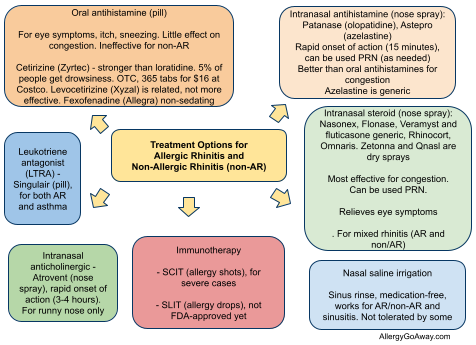
Treatment Options for Allergic Rhinitis and Non-Allergic Rhinitis (click to enlarge the image).

Dust mite avoidance (click to enlarge the image).

Allergic (atopic) march (click here to enlarge the image).

Diagnosis of Chronic Urticaria (click to enlarge the image).

Chronic Urticaria Treatment (click to enlarge the image).

Atopic Dermatitis Treatment - Illustrated (click to enlarge the image).
Comparison of diagnostic methods for peanut, egg, and milk allergy - SPT vs. sIgE

Asthma Inhalers (click to enlarge the image).

Severe asthma (click to enlarge the image).

Modified Asthma Predictive Index (API) (click to enlarge the image).
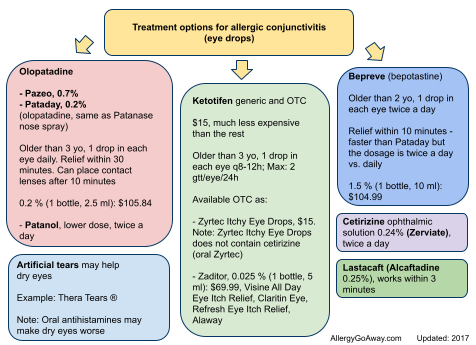
Ocular antihistamines (eye drops) (click to enlarge the image).

Intranasal antihistamines (click to enlarge the image).

Primary immunodeficiency disorders (PIDD) (click to enlarge the image).
Typical pattern of immunoglobulin levels (IgG, IgA, IgM) in humoral immunodeficiency
Published: 03/12/2008
Updated: 09/25/2011
Reviewer: S. Randhawa, M.D., Allergist/Immunologist
Treatment Options for Allergic Rhinitis and Non-Allergic Rhinitis (click to enlarge the image).
Dust mite avoidance (click to enlarge the image).
Allergic (atopic) march (click here to enlarge the image).
Diagnosis of Chronic Urticaria (click to enlarge the image).
Chronic Urticaria Treatment (click to enlarge the image).
8 foods cause 90 percent of food allergies (TEMPS WFS) (click to enlarge the image).
Atopic Dermatitis Treatment - Illustrated (click to enlarge the image).
Comparison of diagnostic methods for peanut, egg, and milk allergy - SPT vs. sIgE
Asthma Inhalers (click to enlarge the image).
Severe asthma (click to enlarge the image).
Modified Asthma Predictive Index (API) (click to enlarge the image).
Ocular antihistamines (eye drops) (click to enlarge the image).
Intranasal antihistamines (click to enlarge the image).
Primary immunodeficiency disorders (PIDD) (click to enlarge the image).
Typical pattern of immunoglobulin levels (IgG, IgA, IgM) in humoral immunodeficiency
Published: 03/12/2008
Updated: 09/25/2011
How to use your asthma inhalers and nebulizer
Editor: V. Dimov, M.D., Allergist/Immunologist, Assistant Professor at University of Chicago
How to Use the Nebulizer Machine (albuterol, Xopenex, budesonide) - Demonstration Video. This video is an excerpt from the DVD Living With Asthma: A Guide to Controlling Your Asthma produced by St. Louis Children's Hospital:
How to Use a Nebulizer, from National Jewish Hospital: http://bit.ly/VCjfAp
How to Use a Metered Dose Inhaler (albuterol, Flovent, Symbicort, Dulera) - Demonstration Video. This video is an excerpt from the DVD Living With Asthma: A Guide to Controlling Your Asthma produced by St. Louis Children's Hospital:
How to Use the a Twisthaler (Asmanex) - Demonstration Video from National Jewish Hospital:
How to Use a Diskus Inhaler (Advair or Flovent) - Demonstration Video. This video is an excerpt from the DVD Living With Asthma: A Guide to Controlling Your Asthma produced by St. Louis Children's Hospital:
How to Use a Diskus, from National Jewish Hospital: http://bit.ly/VCiOpE
How to Use the a Flexhaler (Pulmicort) - Demonstration Video. This video is an excerpt from the DVD Living With Asthma: A Guide to Controlling Your Asthma produced by St. Louis Children's Hospital:
Related videos and information
How to Use an Inhaler. ACP.
How to Use an Inhaler with a Spacer. ACP.
How to Use a Diskus Inhaler. ACP.
Published: 02/07/2011
Updated: 10/21/2012
How to Use the Nebulizer Machine (albuterol, Xopenex, budesonide) - Demonstration Video. This video is an excerpt from the DVD Living With Asthma: A Guide to Controlling Your Asthma produced by St. Louis Children's Hospital:
How to Use a Nebulizer, from National Jewish Hospital: http://bit.ly/VCjfAp
How to Use a Metered Dose Inhaler (albuterol, Flovent, Symbicort, Dulera) - Demonstration Video. This video is an excerpt from the DVD Living With Asthma: A Guide to Controlling Your Asthma produced by St. Louis Children's Hospital:
How to Use the a Twisthaler (Asmanex) - Demonstration Video from National Jewish Hospital:
How to Use a Diskus Inhaler (Advair or Flovent) - Demonstration Video. This video is an excerpt from the DVD Living With Asthma: A Guide to Controlling Your Asthma produced by St. Louis Children's Hospital:
How to Use a Diskus, from National Jewish Hospital: http://bit.ly/VCiOpE
How to Use the a Flexhaler (Pulmicort) - Demonstration Video. This video is an excerpt from the DVD Living With Asthma: A Guide to Controlling Your Asthma produced by St. Louis Children's Hospital:
Related videos and information
How to Use an Inhaler. ACP.
How to Use an Inhaler with a Spacer. ACP.
How to Use a Diskus Inhaler. ACP.
Published: 02/07/2011
Updated: 10/21/2012
How to use a spacer device for inhalation
Editor: V. Dimov, M.D., Allergist/Immunologist, Assistant Professor at University of Chicago
How to Use a Metered Dose Inhaler with a Spacer (albuterol, Xopenex, Flovent, Symbicort, Dulera) - Demonstration Video. This video is an excerpt from the DVD Living With Asthma: A Guide to Controlling Your Asthma produced by St. Louis Children's Hospital:
Aerochamber, from National Jewish http://bit.ly/VClaF0
How to Use an AeroChamber with a Face Mask for Chidlren Younger than Age 5 (albuterol, Xopenex, Flovent) - Demonstration Video. This video is an excerpt from the DVD Living With Asthma: A Guide to Controlling Your Asthma produced by St. Louis Children's Hospital:
Aerochamber with Mask, from National Jewish http://bit.ly/VClfIW
For older children and adults: How to use a metered dose asthma inhaler - open mouth technique for albuterol, Xopenex, Flovent, Symbicort, Dulera. Watch this American Lung Association video to learn the correct way to use your metered dose (MDI) asthma inhaler:
For older children and adults: How to use a metered dose asthma inhaler with a spacer or valved holding chamber (albuterol, Xopenex, Flovent, Symbicort, Dulera). Watch this American Lung Association video to learn the correct way to use your metered dose (MDI) asthma inhaler:
Published: 02/07/2011
Updated: 10/21/2012
How to Use a Metered Dose Inhaler with a Spacer (albuterol, Xopenex, Flovent, Symbicort, Dulera) - Demonstration Video. This video is an excerpt from the DVD Living With Asthma: A Guide to Controlling Your Asthma produced by St. Louis Children's Hospital:
Aerochamber, from National Jewish http://bit.ly/VClaF0
How to Use an AeroChamber with a Face Mask for Chidlren Younger than Age 5 (albuterol, Xopenex, Flovent) - Demonstration Video. This video is an excerpt from the DVD Living With Asthma: A Guide to Controlling Your Asthma produced by St. Louis Children's Hospital:
Aerochamber with Mask, from National Jewish http://bit.ly/VClfIW
For older children and adults: How to use a metered dose asthma inhaler - open mouth technique for albuterol, Xopenex, Flovent, Symbicort, Dulera. Watch this American Lung Association video to learn the correct way to use your metered dose (MDI) asthma inhaler:
For older children and adults: How to use a metered dose asthma inhaler with a spacer or valved holding chamber (albuterol, Xopenex, Flovent, Symbicort, Dulera). Watch this American Lung Association video to learn the correct way to use your metered dose (MDI) asthma inhaler:
Published: 02/07/2011
Updated: 10/21/2012
How To Use Epinephrine Autoinjector - Auvi-Q or EpiPen
Editor: V. Dimov, M.D., Allergist/Immunologist, Assistant Professor at University of Chicago
This 2-minute video shows the Sanofi's new voice guided Auvi-Q epinephrine injector in action:
Start here: How to use EpiPen. Self-injectable epinephrine (SIE) in the form of a device (EpiPen) was first introduced in 1980.
Video instructions on use of the EpiPen (epinephrine/adrenaline) autoinjector for anaphylaxis from the Australasian Society of Clinical Immunology and Allergy (ASCIA):
How To Use an EpiPen video from Nationwide Children's Hospital in Columbus, Ohio:
Tips for managing food allergy (MJA, 2004):
- Always carry an EpiPen 2-Pak
- Always read food labels
- Ask questions about food preparation (be aware of the risk of cross-contamination)
- No label/no eat
- No EpiPen/no eat
- Tell friends about a serious food allergy
- Tell friends if feeling unwell, especially after eating
The action plans for food allergy and anaphylaxis include the use of EpiPen as first line of treatment.
Key points:
- There is no cure for food allergies at this time
- 8% of U.S. children under 18 have at least one food allergy
- Epinephrine is the first line life-saving medication in severe food allergic reaction. Always carry an EpiPen with you, and remember these simple memory rules in severe food allergic reaction:
- "No Epi, no eat-y" (always carry an EpiPen with you, don't sit down to eat if you don't have an EpiPen available)
- "If it's more than the skin, the Epi goes in" (only mild hives may respond to antihistamine, for anything else you may need an EpiPen)
References
How to use Epipen (official video)
Official EpiPen App for iPhone and iPad
Action plans: asthma, food allergy, rhinitis, anaphylaxis
Training of trainers on epinephrine autoinjector use increases correct use from 23.3% to 74.2% http://goo.gl/lMfSR
Food allergy and anaphylaxis training - free at AllergyReady.com
Time epinephrine needs to reach muscle - holding the device in place for 1 second is as effective as 10 seconds. Annals of Allergy, Asthma and Immunology, 2011.
Related reading
"Epinephrine is to anaphylaxis as an AED (defibrillator) is to someone suffering cardiac arrest. Life-saving." Forbes, 2012.
Published: 01/29/2011
Updated: 05/12/2012
This 2-minute video shows the Sanofi's new voice guided Auvi-Q epinephrine injector in action:
Start here: How to use EpiPen. Self-injectable epinephrine (SIE) in the form of a device (EpiPen) was first introduced in 1980.
Video instructions on use of the EpiPen (epinephrine/adrenaline) autoinjector for anaphylaxis from the Australasian Society of Clinical Immunology and Allergy (ASCIA):
How To Use an EpiPen video from Nationwide Children's Hospital in Columbus, Ohio:
Tips for managing food allergy (MJA, 2004):
- Always carry an EpiPen 2-Pak
- Always read food labels
- Ask questions about food preparation (be aware of the risk of cross-contamination)
- No label/no eat
- No EpiPen/no eat
- Tell friends about a serious food allergy
- Tell friends if feeling unwell, especially after eating
The action plans for food allergy and anaphylaxis include the use of EpiPen as first line of treatment.
Key points:
- There is no cure for food allergies at this time
- 8% of U.S. children under 18 have at least one food allergy
- Epinephrine is the first line life-saving medication in severe food allergic reaction. Always carry an EpiPen with you, and remember these simple memory rules in severe food allergic reaction:
- "No Epi, no eat-y" (always carry an EpiPen with you, don't sit down to eat if you don't have an EpiPen available)
- "If it's more than the skin, the Epi goes in" (only mild hives may respond to antihistamine, for anything else you may need an EpiPen)
References
How to use Epipen (official video)
Official EpiPen App for iPhone and iPad
Action plans: asthma, food allergy, rhinitis, anaphylaxis
Training of trainers on epinephrine autoinjector use increases correct use from 23.3% to 74.2% http://goo.gl/lMfSR
Food allergy and anaphylaxis training - free at AllergyReady.com
Time epinephrine needs to reach muscle - holding the device in place for 1 second is as effective as 10 seconds. Annals of Allergy, Asthma and Immunology, 2011.
Related reading
"Epinephrine is to anaphylaxis as an AED (defibrillator) is to someone suffering cardiac arrest. Life-saving." Forbes, 2012.
Published: 01/29/2011
Updated: 05/12/2012
Saline Sinus Rinse/Flush - Patient Education Videos
Editor: V. Dimov, M.D., Allergist/Immunologist, Assistant Professor at University of Chicago
Saline nasal irrigation bathes the nasal cavity with liquid by instilling saline into 1 nostril and allowing it to drain out of the other nostril (typically, it drains from both nostrils and the mouth). Only use sterile, distilled, filtered water (using a filter with an absolute pore size of 1 μm or smaller), or previously boiled water for nasal irrigation.
NeilMed Sinus Rinse Video.
Pediatric Nasal Saline Flush/Rinse. Fauquier ENT | January 28, 2008 | This video shows a young child performing saline flushes to his nose without assistance. Indeed, kids older than 5 years are able to perform flushes without difficulty.
Adult Saline Sinus Rinse/Flush. Fauquier ENT | December 05, 2007 | Patient performing a saline flush to his nose. This procedure is often performed by patients who have chronic sinusitis or allergies.
Techniques and devices
Techniques and devices include:
- low positive pressure from a spray or squirt bottle
- gravity-based pressure using a neti pot or other vessel with a nasal spout
Indications
A range of conditions may respond to saline nasal irrigation but the evidence supporting its use is less conclusive:
- allergic rhinitis
- acute upper respiratory tract infections (URTI)
- rhinitis of pregnancy
- acute rhinosinusitis
The exact mechanism of action of saline nasal irrigation is unknown. Saline nasal irrigation may improve nasal mucosa function through direct cleansing; removal of inflammatory mediators, and improved mucociliary function, as suggested by increased ciliary beat frequency.
Adverse effects
Fewer than 10% of patients reported adverse effects:
- self-limited sensation of ear fullness
- "stinging" of the nasal mucosa
- rarely epistaxis
-infections. Louisiana Department of Health and Hospitals warned against improper use following the deaths of two people who were infected with Naegleria fowleri after using tap water to irrigate their sinuses. Read more here: Is Rinsing Your Sinuses Safe?
Contraindications
Contraindications for saline nasal irrigation include:
- incompletely healed facial trauma
- increased risk for aspiration, such as intention tremor or other neurologic or musculoskeletal problems.
Recommendations
- For chronic rhinosinusitis, nasal irrigation is an effective adjunctive therapy (level of evidence, A).
- Limited evidence for effective adjunctive treatment of irritant or allergic rhinitis, viral upper respiratory tract infection, and postoperative care after endoscopic sinus surgery (level of evidence, B).
- rhinitis of pregnancy, acute rhinosinusitis, sinonasal sarcoidosis, and Wegener's granulomatosis (level of evidence, C).
Mayo Clinic: What can you do about that runny nose and nasal congestion? Medications are one option, but so is nasal cleansing.
Treatment Options for Allergic Rhinitis (click to enlarge the image).
References
Use of Saline Nasal Irrigation Reviewed. Laurie Barclay, MD. Medscape, 2009.
Saline Nasal Irrigation for Upper Respiratory Conditions. Am Fam Physician. 2009 November 15; 80(10): 1117–1119 (PDF).
SinuSurf (nasal saline rinse with surfactant) associated with loss of smell "for months to years". Discontinue use (PDF) http://goo.gl/awQUP
Neti Pot, Nasal Irrigation - Pros and Cons and Slideshow. WebMD, 2011.
North Louisiana Woman Dies from Rare Ameba Infection. DHH warns residents about improper neti pot use, 2011.
Is Rinsing Your Sinuses Safe? FDA replies: http://goo.gl/XL5bJ
Chronic sinus infections with mycobacteria associated with sinus rinses with tap water (nasal washing) http://goo.gl/wiV12
Published: 02/07/2011
Updated: 08/27/2012
Saline nasal irrigation bathes the nasal cavity with liquid by instilling saline into 1 nostril and allowing it to drain out of the other nostril (typically, it drains from both nostrils and the mouth). Only use sterile, distilled, filtered water (using a filter with an absolute pore size of 1 μm or smaller), or previously boiled water for nasal irrigation.
NeilMed Sinus Rinse Video.
Pediatric Nasal Saline Flush/Rinse. Fauquier ENT | January 28, 2008 | This video shows a young child performing saline flushes to his nose without assistance. Indeed, kids older than 5 years are able to perform flushes without difficulty.
Adult Saline Sinus Rinse/Flush. Fauquier ENT | December 05, 2007 | Patient performing a saline flush to his nose. This procedure is often performed by patients who have chronic sinusitis or allergies.
Techniques and devices
Techniques and devices include:
- low positive pressure from a spray or squirt bottle
- gravity-based pressure using a neti pot or other vessel with a nasal spout
Indications
A range of conditions may respond to saline nasal irrigation but the evidence supporting its use is less conclusive:
- allergic rhinitis
- acute upper respiratory tract infections (URTI)
- rhinitis of pregnancy
- acute rhinosinusitis
The exact mechanism of action of saline nasal irrigation is unknown. Saline nasal irrigation may improve nasal mucosa function through direct cleansing; removal of inflammatory mediators, and improved mucociliary function, as suggested by increased ciliary beat frequency.
Adverse effects
Fewer than 10% of patients reported adverse effects:
- self-limited sensation of ear fullness
- "stinging" of the nasal mucosa
- rarely epistaxis
-infections. Louisiana Department of Health and Hospitals warned against improper use following the deaths of two people who were infected with Naegleria fowleri after using tap water to irrigate their sinuses. Read more here: Is Rinsing Your Sinuses Safe?
Contraindications
Contraindications for saline nasal irrigation include:
- incompletely healed facial trauma
- increased risk for aspiration, such as intention tremor or other neurologic or musculoskeletal problems.
Recommendations
- For chronic rhinosinusitis, nasal irrigation is an effective adjunctive therapy (level of evidence, A).
- Limited evidence for effective adjunctive treatment of irritant or allergic rhinitis, viral upper respiratory tract infection, and postoperative care after endoscopic sinus surgery (level of evidence, B).
- rhinitis of pregnancy, acute rhinosinusitis, sinonasal sarcoidosis, and Wegener's granulomatosis (level of evidence, C).
Mayo Clinic: What can you do about that runny nose and nasal congestion? Medications are one option, but so is nasal cleansing.
Treatment Options for Allergic Rhinitis (click to enlarge the image).
References
Use of Saline Nasal Irrigation Reviewed. Laurie Barclay, MD. Medscape, 2009.
Saline Nasal Irrigation for Upper Respiratory Conditions. Am Fam Physician. 2009 November 15; 80(10): 1117–1119 (PDF).
SinuSurf (nasal saline rinse with surfactant) associated with loss of smell "for months to years". Discontinue use (PDF) http://goo.gl/awQUP
Neti Pot, Nasal Irrigation - Pros and Cons and Slideshow. WebMD, 2011.
North Louisiana Woman Dies from Rare Ameba Infection. DHH warns residents about improper neti pot use, 2011.
Is Rinsing Your Sinuses Safe? FDA replies: http://goo.gl/XL5bJ
Chronic sinus infections with mycobacteria associated with sinus rinses with tap water (nasal washing) http://goo.gl/wiV12
Published: 02/07/2011
Updated: 08/27/2012
How to use a nose spray
Editor: V. Dimov, M.D., Allergist/Immunologist, Assistant Professor at University of Chicago
How to use your nose spray (video):
1. Gently blow your nose to clear it of mucus before using the medication.
2. Remove the cap and shake the bottle.
3. Hold the pump bottle with your thumb at the bottom and your index and middle fingers on top.
4. The first time you use the pump spray each day, you may have to prime it by squirting a few times into the air until a fine mist comes out.
5. Tilt your head forward slightly. Breathe out slowly.
6. Insert into the nostril and aim the nozzle toward the outside of the nose and away from the nasal septum (the cartiledge which divides our nose in half).
7. Squeeze the pump as you begin to breathe in slowly through your nose.
8. Repeat these steps for the other nostril. If you are using more than one spray in each nostril, follow all these steps again. Try not to sneeze or blow your nose just after using the spray.
Nosebleeds are among the most commonly reported adverse effect of intranasal corticosteroid sprays. However, they tend to result from incorrect positioning of the device ("hitting" the septum in the middle), rather than an adverse reaction to the medication.
Common errors to avoid when using a nose spray include the following:
- forgetting to prime the spray device;
- skipping doses
- wrong head position (should be tilted forward, not back)
- pushing nozzle too hard or too far into the nose;
- blowing nose hard after spraying (the medicine is lost)
- sniffing hard after spraying (the medicine is deposited in the throat instead of the nose)
- using saline sprays or irrigations after using corticosteroid spray, instead of before
The National Asthma Council Australia has instructional 'how to' videos on using your nose spray.
Demonstration of how to use Nasonex intranasal spray correctly (video):
Demonstration of how to use Veramyst intranasal spray correctly (called "Avamys" in Australia):
Demonstration of how to use Rhinocort intranasal spray correctly (video):
Antihistamines offer little help in perennial allergic rhinitis where nasal obstruction may not be histamine mediated. A steroid nose spray may work best in perennial allergic rhinitis, for example, rhinitis caused by allergy to dust mite (http://goo.gl/PL5XH).
References Intranasal corticosteroid spray technique Using your asthma inhaler
Published: 01/12/2011
Updated: 10/09/2012
How to use your nose spray (video):
1. Gently blow your nose to clear it of mucus before using the medication.
2. Remove the cap and shake the bottle.
3. Hold the pump bottle with your thumb at the bottom and your index and middle fingers on top.
4. The first time you use the pump spray each day, you may have to prime it by squirting a few times into the air until a fine mist comes out.
5. Tilt your head forward slightly. Breathe out slowly.
6. Insert into the nostril and aim the nozzle toward the outside of the nose and away from the nasal septum (the cartiledge which divides our nose in half).
7. Squeeze the pump as you begin to breathe in slowly through your nose.
8. Repeat these steps for the other nostril. If you are using more than one spray in each nostril, follow all these steps again. Try not to sneeze or blow your nose just after using the spray.
Nosebleeds are among the most commonly reported adverse effect of intranasal corticosteroid sprays. However, they tend to result from incorrect positioning of the device ("hitting" the septum in the middle), rather than an adverse reaction to the medication.
Common errors to avoid when using a nose spray include the following:
- forgetting to prime the spray device;
- skipping doses
- wrong head position (should be tilted forward, not back)
- pushing nozzle too hard or too far into the nose;
- blowing nose hard after spraying (the medicine is lost)
- sniffing hard after spraying (the medicine is deposited in the throat instead of the nose)
- using saline sprays or irrigations after using corticosteroid spray, instead of before
The National Asthma Council Australia has instructional 'how to' videos on using your nose spray.
Demonstration of how to use Nasonex intranasal spray correctly (video):
Demonstration of how to use Veramyst intranasal spray correctly (called "Avamys" in Australia):
Demonstration of how to use Rhinocort intranasal spray correctly (video):
Antihistamines offer little help in perennial allergic rhinitis where nasal obstruction may not be histamine mediated. A steroid nose spray may work best in perennial allergic rhinitis, for example, rhinitis caused by allergy to dust mite (http://goo.gl/PL5XH).
References Intranasal corticosteroid spray technique Using your asthma inhaler
Published: 01/12/2011
Updated: 10/09/2012
Food Allergy Basics (video)
Editor: V. Dimov, M.D., Allergist/Immunologist, Assistant Professor at University of Chicago
The Food Allergy Action Plan by FAAN is available here and from the FAAN website. You may copy these documents and distribute them freely.
Tips for managing food allergy (MJA, 2004):
- Always carry an EpiPen 2-Pak
- Always read food labels
- Ask questions about food preparation (be aware of the risk of cross-contamination)
- No label/no eat
- No EpiPen/no eat
- Tell friends about a serious food allergy
- Tell friends if feeling unwell, especially after eating
Eleanor Garrow, Vice President of Education and Outreach for FAAN, talks about living with food allergies, 2010.
FAANPAL | October 06, 2010 | A presentation of food allergy basics by Eleanor Garrow, Vice President of Education and Outreach for FAAN.
Related information
Food Allergy Information from ACAAI
Free pamphlets (brochures) from National Institutes of Health - Publications Order Form.
Managing Food Allergy - COFAR video, 2012.
Food Allergy: An Overview for Patients (PDF)
Guidelines for the Diagnosis and Management of Food Allergy in the United States: Executive Summary of the NIAID-Sponsored Expert Panel Report (PDF)
Videos from the KFA channel on YouTube -"Kids With Food Allergies"
Food allergy and anaphylaxis training - free at AllergyReady.com
Published: 02/12/2011
Updated: 05/04/2012
The Food Allergy Action Plan by FAAN is available here and from the FAAN website. You may copy these documents and distribute them freely.
Tips for managing food allergy (MJA, 2004):
- Always carry an EpiPen 2-Pak
- Always read food labels
- Ask questions about food preparation (be aware of the risk of cross-contamination)
- No label/no eat
- No EpiPen/no eat
- Tell friends about a serious food allergy
- Tell friends if feeling unwell, especially after eating
Eleanor Garrow, Vice President of Education and Outreach for FAAN, talks about living with food allergies, 2010.
FAANPAL | October 06, 2010 | A presentation of food allergy basics by Eleanor Garrow, Vice President of Education and Outreach for FAAN.
Related information
Food Allergy Information from ACAAI
Free pamphlets (brochures) from National Institutes of Health - Publications Order Form.
Managing Food Allergy - COFAR video, 2012.
Food Allergy: An Overview for Patients (PDF)
Guidelines for the Diagnosis and Management of Food Allergy in the United States: Executive Summary of the NIAID-Sponsored Expert Panel Report (PDF)
Videos from the KFA channel on YouTube -"Kids With Food Allergies"
Food allergy and anaphylaxis training - free at AllergyReady.com
Published: 02/12/2011
Updated: 05/04/2012
Coupons for Allergy and Asthma Medications - As Supplied by Manufacturer
Editor: V. Dimov, M.D., Allergist/Immunologist and Assistant Professor at University of Chicago
Coupons for asthma medications by MyCouponDoc.com http://goo.gl/pTJZB
Coupons for allergy medications by MyCouponDoc.com http://goo.gl/wjoWG
Coupons for asthma medications by MyCouponDoc.com http://goo.gl/pTJZB
Coupons for allergy medications by MyCouponDoc.com http://goo.gl/wjoWG
Asthma Medications (in alphabetical order)
Advair
Nose Sprays
Benadryl
Proventil HFA
http://www.proventilhfa.com/pfha/index.jsp?namespace=transkit&event=transkit&web_program_id=00000
http://www.proventilhfa.com/pfha/index.jsp?namespace=transkit&event=transkit&web_program_id=00000
Symbicort
$25 per month (first prescription is free), available at: MySymbicort.com
More info here: https://www.mymeasuresforsuccess.com/index.aspx
Xopenex
Nose Sprays
Astepro
Antihistamines (pills)
Benadryl
Epinephrine Auto-injector
Twinject
http://twinject.com/allergy-treatment-resources/injector-rebate.asp
Related Resources
Medication coupons
Twinject
http://twinject.com/allergy-treatment-resources/injector-rebate.asp
Related Resources
Medication coupons
Published: 01/22/2011
Updated: 03/09/2012
Patient Education Videos in Allergy and Immunology
Patient Education Videos by Focus Medica Pte. Ltd.:
Chronic Asthma
Chronic Obstructive Pulmonary Disease (COPD)
Sinusitis
Otitis Media
Published: 03/03/2010
Updated: 03/03/2010
Chronic Asthma
Chronic Obstructive Pulmonary Disease (COPD)
Sinusitis
Otitis Media
Published: 03/03/2010
Updated: 03/03/2010
Patient Information
 Editor: V. Dimov, M.D., Allergist/Immunologist and Assistant Professor at University of Chicago
Videos for patient education
How to use your asthma inhaler and nebulizer
How to use a spacer
How to use a nose spray
Saline sinus rinse
How to use an EpiPen
Food allergy
What to expect when visiting an allergy clinic
Current allergy skin tests are virtually painless. This video by Dr. Bassett, a board-certified allergist from New York City, shows what to expect when visiting an allergy clinic for diagnosis and treatment:
Printouts/handouts for patient education
Action plans: asthma, food allergy, rhinitis, anaphylaxis
Diagrams for Patient Education
Allergic Conditions A to Z and The Virtual Allergist by AAAAI
Food allergy handouts by The Food Allergy and Anaphylaxis Network (FAAN)
Food Allergy: An Overview for Patients by NIH (PDF)
Guide to Parenting a Child with Food Allergies by KFA (PDF)
Allergy tips
Allergic Reactions
Hives (urticaria) and angioedema
Eczema or atopic dermatitis
Contact dermatitis
Allergic Skin Conditions
Allergic shiners, Dennie's lines, Allergic salute, Nasal crease, Postnasal drip
Allergy Shots (Immunoterapy)
Allergy Testing
Anaphylaxis
Asthma and Allergy Medications
Asthma and Exercise
Asthma, Allergies and Pregnancy
Asthma Triggers and Management
Childhood Asthma
Cough in Children
Food Allergy Information from ACAAI
Food Allergy
Indoor Allergens
Inhaled Asthma Medications
Latex Allergy
Medications and Drug Allergic Reactions
Medications and Older Adults
Occupational Asthma
Outdoor Allergens
Peak Flow Meter
Prevention of Allergies and Asthma in Children
Rhinitis
Sinusitis
Stinging Insect Allergy
Traveling with Allergies and Asthma
Additional resources
Ashtma Stepwise Therapy in Children (figures). Expert Panel Report 3.
Asthma Control Test (ACT) - web-based version, PDFs
Asthma Action Plan (PDF) and wallet card (PDF) by NHLBI
Asthma Management Guide (for providers) (PDF)
My EIB Journal from ACAAI - exercise-induced bronchoconstriction (EIB)
Rhinosinusitis: Saline sinus rinse recipe, AAAAI
Kids Connection, Books and Toys from Immune Deficiency Foundation (IDF)
Anaphylaxis Checklist, ACAAI
Checklist for Sneeze-Free and Wheeze-Free Home, ACAAI
Patient Education - Advice from Your Allergist by ACAAI
WebMD Allergy Guide
Food allergy and anaphylaxis training - free at AllergyReady.com
Files
Coupons for Allergy and Asthma Medications
Useful Products for Selected Patients with Allergy and Asthma
Patient Handouts - FromYourDoctor.com
Patient Handout Search Engine
Coloring books
Are you food allergy aware - Ana & Phil Axis (PDF)
Dusty The Asthma Goldfish and His Asthma Triggers Coloring Book, by EPA (PDF)
Doctor Al and the Sneeze 'n Wheeze Busters Coloring Book - AAAAI (PDF)
Search for medical information from Medline and UpToDate
If you are seeing this, you have attempted to link to the UpToDate widget but are experiencing a problem. Please visit UpToDate for more information.
Published: 12/11/2008
Updated: 04/12/2013
Subscribe to:
Posts (Atom)