Author: V. Dimov, M.D., Allergist/Immunologist and Assistant Professor at University of Chicago
Reviewer: S. Randhawa, M.D., Allergist/Immunologist and Assistant Professor at NSU
A 34-year-old female is at the allergy clinic for evaluation of suspected allergy to mushroom. No history of allergic rhinitis, asthma, or atopic dermatitis.
Symptoms started 6 months ago, with abdominal pain and diarrhea within minutes of ingesting mushrooms (both cooked and raw mushrooms, portobello and button mushrooms). She has tried the same dishes with no mushrooms and there were no symptoms. She reports some milder symptoms when eating goat cheese and drinking beer.
Past Medical History, Past Surgical History, Family Medical History, Social History: Not contributory.
Review Of Systems: 12/14 systems were reviewed, negative apart from history of present illness above.
Physical Examination: Unremarkable.
Labs reviewed: ImmunoCAP IgE FEIA negative for multiple allergens, including champignon mushroom, and with low-normal IgE of 15.
What is the most likely diagnosis?
GI intolerance to mushrooms (portobello and button mushrooms). Food allergy to mushroom is unusual but can be seen. However, 80% of patients with food allergy have skin symptoms which she did not have. The history is suggestive of non-IgE mediated GI intolerance. As a precaution, Auvi-Q was prescribed until the workup is completed.
Percutaneous skin testing with indoor, outdoor, and food allergens was negative. The clinic did not have mushrooms available for prick-puncture test.
Differential diagnosis includes IBS or symptoms with histamine-rich food such as cheese and beer. None of these entities are IgE-mediated.
Helpful questions include:
Obtain a history of the exposure that includes the following:
- Quantity of mushrooms ingested
- Preparation of the mushroom (eg, raw or cooked)
- Source of the mushroom (eg, gathered outdoors or purchased via the Internet)
- Time of ingestion
- Any other people who may have ingested the same mushrooms
- Symptoms noted and time to onset of symptoms after ingestion
- Any other types of mushrooms that may have been ingested at the same meal
- Prehospital treatment, including home remedies
- Medications regularly taken
- Past medical history, with a focus on arrhythmias, asthma, prostatic hypertrophy, and gastric outlet obstruction
What management would you suggest?
Complete avoidance of mushrooms was suggested. As a precaution, Auvi-Q was prescribed until the workup is completed. In case of anaphylaxis, call 911.
Prick-puncture test with fresh mushrooms was suggested. If the test is negative, IgE-mediated food allergy to mushroom would be unlikely.
Differential diagnosis includes IBS or symptoms with histamine-rich food such as cheese and beer. None of these entities are IgE-mediated. The patient may benefit from GI evaluation.
Summary
Food and airborne allergy to mushrooms
Mushrooms are antigenically rich and that a species can have more than one allergen. The prevalence of mushroom allergy is not known. Aerospora of mushrooms and other woodland fungi, mostly basidiospores, occur in temperature zones in June to November, reaching maximum in August and September in quantities comparable to pollen and mold spores. There are large local and annual variations in species and spore concentrations in different milieus. In SPT and BPT studies about two dozen of these species have been associated with inhalant type I allergy.
Mushroom toxicity
There are thousands of species of mushrooms, but only about 100 species of mushrooms cause symptoms when eaten by humans, and only 15-20 mushroom species are potentially lethal when ingested.
Occupational exposure to mushrooms
Exposure to mushroom spores may cause many respiratory allergic diseases. In a 3-year study over 90% workers in a mushroom factory were sensitized to the spore, 40% quit because of the symptoms and 5% developed hypersensitivity pneumonitis (HP). It was suggested that workers should be counselled about the risk of mushroom allergy and precautionary measures should be taken to prevent its occurrence.
Histamine intolerance and histamine-rich foods
Histamine intolerance results from a disequilibrium of accumulated histamine and the capacity for histamine degradation. Histamine is a biogenic amine that occurs to various degrees in many foods. In healthy persons, dietary histamine can be rapidly detoxified by amine oxidases, whereas persons with low amine oxidase activity are at risk of histamine toxicity. Diamine oxidase (DAO) is the main enzyme for the metabolism of ingested histamine.
The ingestion of histamine-rich food or of alcohol or drugs that release histamine or block DAO may provoke diarrhea, headache, rhinoconjunctival symptoms, asthma, hypotension, arrhythmia, urticaria, pruritus, flushing, and other conditions in patients with histamine intolerance. Symptoms can be reduced by a histamine-free diet or be eliminated by antihistamines.
Foods rich in histamine
Fish (frozen/smoked or salted/canned)
Cheese
Meat, sausage, salami, ham
Vegetables - Sauerkraut, Spinach, Eggplant, Tomato ketchup
Red wine vinegar
Alcohol
Foods with suggested histamine-releasing capacity
Plant-derived
Citrus fruit
Papaya
Strawberries
Pineapple
Nuts
Peanuts
Tomatoes
Spinach
Chocolate
Animal-derived
Fish
Crustaceans
Pork
Egg white
Other
Additives
Liquorice
Spices
References
Mushroom allergy. Koivikko A, Savolainen J. Allergy. 1988 Jan;43(1):1-10.
http://www.ncbi.nlm.nih.gov/pubmed/3278649
Mushroom Toxicity. Medscape.
http://emedicine.medscape.com/article/167398-overview
Three-year follow-up study of allergy in workers in a mushroom factory. Tanaka H, Saikai T, Sugawara H, Tsunematsu K, Takeya I, Koba H, Matsuura A, Imai K, Abe S. Respir Med. 2001 Dec;95(12):943-8.
http://www.ncbi.nlm.nih.gov/pubmed/11778790
Histamine and histamine intolerance. Laura Maintz and Natalija Novak. Am J Clin Nutr May 2007 vol. 85 no. 5 1185-1196.
http://ajcn.nutrition.org/content/85/5/1185.long
Published: 05/12/2013
Updated: 02/01/2014
Showing posts with label Food Allergy. Show all posts
Showing posts with label Food Allergy. Show all posts
New developments in the care for patients with food allergy in 2012
8% of children and 2% of adults have food allergy. More than 170 different foods have been reported to cause allergic reactions.
The mechanisms causing food-induced allergic reactions can be:
- IgE mediated
- non-IgE mediated
- related to cellular mechanisms
- associated with eosinophilic inflammation
- a mixture of multiple mechanisms
Management of food allergy is complicated by varied misconceptions within the medical community and the public at large.
Guidelines development for food allergy
Diagnostic tools have primarily focused on IgE-mediated food allergy with implementation of skin prick and allergen-specific IgE testing to make the correct diagnosis, or rule out IgE-mediated disease, as in the case of food protein–induced enterocolitis syndrome (FPIES).
In 2010, the National Institute of Allergy and Infectious Disease published the first “Guidelines on the diagnosis and management of food allergy”.
In 2012, the International Collaboration in Asthma and Allergy assembled an expert panel and published an international consensus. The European Allergy and Asthma guidelines have been published as a working document. A committee formed by the Joint Council of Allergy and Immunology (JCAI) is preparing an updated food allergy practice parameter. The AAAAI has published a guideline about the performance of oral food challenges (OFCs).
New diagnostic tools for food allergy
Component-resolved diagnostics (CRD) testing has recently been approved by the FDA for peanut allergy. CRD uses allergenic proteins derived from recombinant DNA or purification from natural sources to identify sIgE reactivity to recombinant allergenic proteins rather than whole allergen. The current evidence does not support broad clinical use of CRD testing.
sIgE antibodies to Ara h 2 are the most common peanut allergen associated with clinical reactivity. Presence of Ara h 8 alone in patients with birch pollen allergy (with positive Bet v 1 results) might be the source of cross-reactive proteins that increase whole peanut IgE without clinical relevance. However, inconsistencies exist. Different Ara h peanut components have been implicated (in addition to Ara h 2).
CRD did not improve diagnostic accuracy in predicting egg or milk OFC outcomes.
Dietary avoidance and early introduction of food allergens
Many food allergies take long to "outgrow". Even food allergies that are not classically “lifelong” (eg, milk, egg, and soy) are present well into the school-age years for many patients.
Current guidelines for introduction of foods in infants at high risk for food allergy suggest:
- breast-feeding for 4 to 6 months with delayed solid introduction
- use of a hydrolyzed formula for supplementation
- no dietary restrictions in pregnant or lactating women
- delays in allergenic food introduction for children with known food allergy
There is no evidence to make recommendations about the timing of major food allergen introduction.
Food challenges with heated egg and milk proteins in children with milk and egg allergy is an active research area.
New epinephrine autoinjector device
A new epinephrine autoinjector, Auvi-Q (Sanofi) was approved by the FDA n 2012. It has both audio and visual cues that guides the user through each step of the injection process. This device is available in both 0.15- and 0.3-mg doses (same doses as EpiPen).
New billing code for OFC in the U.S. - International Classification of Diseases–ninth (ICD-9) revision coding
The very modest reimbursement for OFC has been a barrier resulting in underuse of this very effective diagnostic tool. Two new codes to better describe ingestion challenge (IG) were approved in 2012 and go into effect January 1, 2013:
- 95076 describes the baseline ingestion (food) challenge and covers the first 2-hour period of an oral challenge; most IGs, particularly open food challenges, fall under this code
- the more complicated IGs last longer than 2 hours, and for these situations, a second add-on code (95079) has been assigned. This code is billed on an hourly basis for the remaining period of the challenge.
For a food challenge that lasts less than 61 minutes total, under CPT rules for timed codes, the clinician cannot bill the IG code but should only bill for this as an evaluation and management service.
JCAAI, representing allergy, has successfully obtained approval for two new codes for ingestion challenge testing - with a significant increase in reimbursement over 2012. The old code – 95075 - will no longer be recognized - effective January 1, 2013. As of that date, the first two hours of an ingestion challenge will be coded 95076 and each additional hour will be coded 95079. The RVUs for 95076 are 3.45, an 85% increase in reimbursement. The RVUs for each hour of additional challenge time beyond two hours and 31 minutes is 2.41 RVUs. Added together, reimbursement for a three-hour challenge will increase approximately 300% over last year. Source: JCAAI (PDF).
Advocacy organizations
Many organizations have worked to improve awareness and raise funds for research. A list of their websites is provided below:
foodallergy.org
aafa.org
kidswithfoodallergies.org
aaaai.org
acaai.org
aaem.org
aap.org
aasa.org
aap.org/sections/schoolhealth
nasn.org
naesp.org
allergyready.com
stlouischildrens.org
schools.allergyhome.org
foodallergybooks.com
allergysupport.org
foodallergyed.com
allergyeats.com
cofarstudy.org
Labeling laws and food safety
The US Food Allergen Labeling and Consumer Protection Act of 2004 (www.fda.gov/Food/FoodSafety/FoodAllergens) requires labeling of foods related to the “major allergens” (egg, milk, wheat, soy, fish, crustacean shellfish, peanut, and tree nuts). A significant labeling exemption is related to highly refined oils derived from food allergens (e.g. peanut oil).
The US law does not regulate the use of advisory labeling, such as “may contain” or “manufactured on equipment with”.
Commercial airline travel safety
The “Top 10 tips for airline travelers with food allergy” are available at foodallergy.org.
Food Safety Modernization Act and Food Allergy and Anaphylaxis Management Act (2011)
This law requires that the US Secretary of Health and Human Services develop and make available to schools a voluntary policy to manage the risk of food allergy and anaphylaxis among students.
School Access to Emergency Epinephrine Act
A few states have laws related to stock epinephrine. 24% of all epinephrine administrations at school were provided to people whose allergy was unknown at the time of administration. Mylan Specialty pharmaceutical company has enacted a program, “EpiPen4Schools,” beginning in August 2012. This program allows for acquisition of up to 4 free EpiPen or EpiPenJr autoinjectors with a prescription, to schools (www.EpiPen4Schools.com).
Research
The terms desensitization and tolerance are often used:
- Desensitization refers to a change in the threshold dose of ingested allergen required to induce allergic symptoms after food exposure occurring during therapy
- Tolerance refers to the long-lasting effects of treatment that persist after the treatment is stopped and allow a patient to fully consume the food
The development of tolerance remains controversial in food allergy therapeutics. The concept of “sustained unresponsiveness” has been introduced. This area is a subject of ongoing research.
Humanized monoclonal anti-IgE
Omalizumab, a recombinant, humanized, anti-IgE mAb therapy has been used in 2 randomized controlled trials for peanut allergy. The trials did not show significant bnefits. Currently, trials are in progress evaluating anti-IgE both as monotherapy and as an adjunct to oral immunotherapy (OIT).
Chinese herbal therapy
Food allergy herbal formula (FAHF-2) contains 9 herbs and is currently in trials. The herbal formula FAHF-2 contains 9 Chinese herbs and is currently in clinical trials for allergy to peanut, tree nuts, sesame, fish, or shellfish.
Oral immunotherapy (OIT)
OIT is associated with clinical and immunologic responses, but it has limitations because of side effects. GI side effects (pain, cramping, nausea, and vomiting) occur in 10-20% of subjects receiving OIT, requiring discontinuation of therapy.
Viral infections, menses, and exercise may decrease the reaction threshold for subjects receiving stable OIT dosing.
Desensitization was associated with:
- increased allergen-specific IgG4 levels
- decreased skin prick test responses
- decreased basophil activation
- decreased TH2 cytokine (IL-5 and IL-13) production
- increased regulatory T-cell numbers with peanut OIT
Specific IgE levels initially increased and then decreased after the first year of study. These changes are similar to the ones observed with the well-established SCIT for airborne allergens.
Tolerance has not been fully defined, or achieved, in clinical trials.
Extensively heated milk and egg protein
A possible alternative or adjunct treatment to OIT is the use of heated allergen to alter protein conformation and reduce IgE binding. Up to 70% of children with milk or egg allergy can safely consume these extensively heated proteins. This is associated with reductions in TH2-type immune responses and accelerated tolerance development.
SLIT
SLIT as a treatment for food allergy has been associated with successes for kiwi, hazelnut, peach, milk, and peanut allergies. Side effects were predominantly oropharyngeal. However, the maximal dose administered in SLIT is limited by the small volume, thus OIT is used in most new studies.
Epicutaneous immunotherapy (EPIT)
EPIT was used in one trial in children with milk allergy. Additional studies are in progress for peanut allergy.
Educational materials
Educational materials related to the 8 most common food allergens are available through foodallergy.org and CoFAR cofargroup.org.
Food allergy programs for schools
“How to C.A.R.E. for students with food allergies: what educators should know” is a free, interactive online course available at AllergyReady.com.
A useful food allergy mnemonic is "CARE":
- Comprehend the basic facts about food allergies
- Avoid the allergen
- Recognize the symptoms of a reaction
- Enact an emergency protocol (Epinephrine)
The Food Allergy Management and Education program for schools was developed by St Louis Children’s Hospital. They have developed a toolkit which is available free of charge at www.stlouischildrens.org.
References:
The changing CARE for patients with food allergy. The Journal of Allergy and Clinical Immunology, Volume 131, Issue 1 , Pages 3-11, January 2013.
http://www.jacionline.org/article/S0091-6749(12)01825-8/fulltext
Protocol for oral food challenge in Food Protein–Induced Enterocolitis Syndrome (FPIES)
Author: V. Dimov, M.D., Allergist/Immunologist and Assistant Professor at University of Chicago
Reviewer: S. Randhawa, M.D., Allergist/Immunologist and Assistant Professor at NSU
Food Protein–Induced Enterocolitis Syndrome (FPIES) is a non–IgE-mediated food allergy that most commonly affects infants. Cow’s milk and soy FPIES resolve in most patients by 3 years of age, patients with solid food FPIES and/or detectable food specific IgE levels may have more protracted courses.
One approach to FPIES diagnosis is follow-up challenges every 18 to 24 months in patients without recent reactions.
Food Protein–Induced Enterocolitis Syndrome Oral Food Challenge Protocol. Source: Food protein–induced enterocolitis syndrome: an update on natural history and review of management. JACI, 08/2011.
- Basic requirements: physician supervision, secure intravenous (IV) access, immediate availability of fluid resuscitation
- Baseline vital signs and peripheral neutrophil count (repeat CBC-Diff in 6 hours)
- Gradual (during 1 hour) administration of food protein 0.06 – 0.6 g/kg body weight in 3 equal doses, generally not to exceed total 3 g of protein or 10 g of total food (100 mL of liquid) for an initial feeding
- If no reaction in 2–3 hours, administer an age-appropriate serving of the food followed by several hours of observation
- Fluid resuscitation: 20 mL/kg IV boluses of normal saline
- Steroids: methylprednisolone, 1 mg/kg IV (maximum, 60 – 80 mg)
- Most patients (more than 50%) with positive challenge results require treatment with intravenous fluids and steroids
An FPIES OFC is considered a high-risk procedure and should be conducted in a setting where intravenous access can be secured and rapid fluid resuscitation given if a reaction occurs. Although an inpatient setting is the most appropriate for FPIES OFCs, outpatient settings equipped with resuscitation capabilities with access to a laboratory (for neutrophil counts and stool analysis) can be used.
For the first serving, doses are administered in 3 portions during 45– 60 minutes for a total of 0.06 to 0.6 g/kg of food protein, starting at a lower dose in patients with a history of severe reactions.
The total amount does not generally exceed 3 to 6 g or 10 to 20 g of total food weight (100 mL of total liquid). If the patient is asymptomatic after 2 to 3 hours, then an age-appropriate serving is usually given as a second serving and the patient is observed for several more hours. First-line therapy in the event of a positive challenge result is rapid intravenous hydration of normal saline given in 20 mL/kg boluses. Intravenous corticosteroids may also be used in severe reactions. Epinephrine should be available.
The challenge is considered positive if typical symptoms and laboratory findings are present:
- Emesis (onset, 1–3 hours)
- Diarrhea (onset, 2–10 hours; mean, 5 hours)
- Lethargy (onset, 1–3 hours)
- Laboratory findings:
Elevated neutrophil count (more than 3500/mcL, peaks at 6 hours)
Frank or occult fecal blood
Fecal leukocytes, red blood cells, and/or eosinophils
Gastric juice leukocytosis (>10 leukocytes per high-power field, at 3 hours)
A complete blood count with differential should be measured prior to challenge, and approximately 6 hours after challenge if there are symptoms. If diarrhea is present, stool guaiac test should be performed and stool samples tested for fecal leukocytes, red blood cells, and eosinophils.
References:
Food Protein–Induced Enterocolitis Syndrome Oral Food Challenge Protocol. Source: Food protein–induced enterocolitis syndrome: an update on natural history and review of management. JACI, 08/2011, http://goo.gl/LlwRU
Food Protein-Induced Enterocolitis Syndrome: Consensus Recommendations for Diagnosis and Treatment Japanese Research Group for Neonatal, Infantile Allergic Disorders, 2011, http://goo.gl/TmdFo
What is FPIES (Food Protein Induced Enterocolitis Syndrome)? http://goo.gl/fTP3O
Food protein-induced enterocolitis syndrome (FPIES) - AAAAI Ask the Expert http://goo.gl/J9aS5
Oral food challenges for diagnosis and management of food allergies - UpToDate http://goo.gl/LtRvE
Published: 05/12/2012
Updated: 08/09/2012
Almond allergy? No, it’s allergy to cockroach-contaminated chocolate-covered almonds
Author: V. Dimov, M.D., Allergist/Immunologist and Assistant Professor at University of Chicago
Reviewer: S. Randhawa, M.D., Allergist/Immunologist and Assistant Professor at NSU
A 35-year-old female is seen in the allergy clinic for evaluation of suspected food allergy. Three months ago, she had abdominal discomfort and shortness of breath within minutes of eating chocolate-covered almonds. She had a methacholine challenge test which was negative. She is here to determine if food or environmental allergies played a role in her symptoms.
Past Medical History: negative.
Medications: none. NKDA.
Physical Examination: HEENT: "allergic shiners". Otherwise unremarkable.
What is the most likely diagnosis?
Food allergy is on the list of differential diagnoses.
What type of diagnostic tests would you suggest?
She had percutaneous skin testing with indoor, outdoor, and food allergens.
Airborne allergens: Positive for Cockroach. Negative for Dust mite, Cat, Dog, Mold, Trees, Grass, Weeds, Ragweed.
Food allergens: negative for Tree nuts (almond, walnut, sesame, hazelnut, pistachio, Brazil nut). Egg, Milk, Peanut, Soy, Wheat, Fish, Shellfish.

Female Blatella germanica cockroach with ootheca (eggs). Image source: Wikipedia, public domain.
What is the cause of this patient’s symptoms?
Allergic rhinitis with sensitization to cockroach. Suspected food allergy with symptoms related to cross-contamination with cockroach.
Patients who consume food products contaminated with cockroach parts such as chocolate or nuts may have an allergic reaction. Her reaction to chocolate-covered almonds could be related to cross-contamination with cockroach. On average, 8 insect parts are found per chocolate bar and deemed safe for most people, according to the FDA’s guidelines.
Skin testing has a 30% greater sensitivity than serum IgE (Cleveland Clinic J of Med, 2011, 78-9, 585-592), and a negative skin test typically rules out clinical environmental or food allergy in approximately 90% of patients.
What would you suggest to prevent future reactions?
Regarding her allergic rhinitis, we recommended avoidance of relevant allergens cetirizine 10 mg po qpm to be used as needed.
Regarding the suspected food allergy, we recommended complete avoidance of tree nuts and peanut due to cross-contamination risk and pending workup for food allergy. EpiPen was prescribed, and she was educated on its use. In case of anaphylaxis, she should call 911. We also provided a food allergy action plan and links to the educational videos on our teaching web site.
An oral food challenge with almond was suggested to rule out food allergy to almond conclusively.
Related reading
Chocolate Allergy? It's Vanishingly Rare
"Chocolate Allergy" is actually due to cockroach in chocolate - up to 60 insect parts per 100 gm bar "acceptable". ABC News, 2012.
FDA Info sheet
Published: 11/28/2011
Updated: 04/08/2012
Hives with consumption of coconut cookie on two occasions - is it food allergy or not?
Author: V. Dimov, M.D., Allergist/Immunologist and Assistant Professor at University of Chicago
Reviewer: S. Randhawa, M.D., Allergist/Immunologist and Assistant Professor at NSU
A 5-year-old boy had facial rash after consumption of coconut cookie on two occasions. He has been avoiding that type of cookie since then. He no history of eczema, asthma or allergic rhinitis.
Family history is positive for father with allergy to shellfish and sunflower seeds.
He is not on any medications on a consistent basis. No known drug allergies
Physical examination is normal.
What would you suggest for diagnostic testing?
He had skin prick testing with limited panel of environmental allergens and a comprehensive panel of food allergens which included the 8 food allergen groups, implicated in more than 90% of food allergic reactions. He had borderline reactions to banana. Otherwise, the skin test was negative for cat, dog, cockroach, dust mite, mold mix, trees, and also negative for peanuts, tree nuts, egg, milk, fish, shellfish, soy, wheat, and sesame. We did not have coconut for skin testing, but that was added to the serum IgE testing.
What is the most likely diagnosis?
This patient has a suspected food allergy to tree nuts, in particular coconut, but the negative skin test makes the likelihood of clinical food allergy lower.
What is the next step in the management?
EpiPen was prescribed to be used in case of anaphylactic reaction. They were educated on the EpiPen use and we provided the link to teaching videos on our website.
Serum IgE testing for tree nuts, peanut, and coconut was ordered. The laboratory results are available show low normal total IgE of 10 kUA/l (low normal), negative sIgE (<0.10) for coconut, tree nuts, peanut, fish, shellfish, banana, and dust mite.
Diagnosis: Reported urticaria with with coconut cookie, with negative skin and blood test; oral food challenge was suggested to rule out food allergy
What happened next?
The combination of clinical history, skin prick test and blood test makes food allergy to coconut unlikely. This conclusion needs to be verified with oral food challenge in the allergy clinic.
Final diagnosis: A month later, the patient had an oral food challenge with the coconut cookie that was negative. Food allergy to coconut was ruled out. The cause of hives remained unclear.

Oral Food Challenges (click to enlarge the diagram).
References
Food Allergy
Food Allergy: Brief Review
Food Allergen Avoidance
Food Challenges for Diagnosis of Food Allergy
Published: 05/12/2011
Updated: 01/22/2012
Reviewer: S. Randhawa, M.D., Allergist/Immunologist and Assistant Professor at NSU
A 5-year-old boy had facial rash after consumption of coconut cookie on two occasions. He has been avoiding that type of cookie since then. He no history of eczema, asthma or allergic rhinitis.
Family history is positive for father with allergy to shellfish and sunflower seeds.
He is not on any medications on a consistent basis. No known drug allergies
Physical examination is normal.
What would you suggest for diagnostic testing?
He had skin prick testing with limited panel of environmental allergens and a comprehensive panel of food allergens which included the 8 food allergen groups, implicated in more than 90% of food allergic reactions. He had borderline reactions to banana. Otherwise, the skin test was negative for cat, dog, cockroach, dust mite, mold mix, trees, and also negative for peanuts, tree nuts, egg, milk, fish, shellfish, soy, wheat, and sesame. We did not have coconut for skin testing, but that was added to the serum IgE testing.
What is the most likely diagnosis?
This patient has a suspected food allergy to tree nuts, in particular coconut, but the negative skin test makes the likelihood of clinical food allergy lower.
What is the next step in the management?
EpiPen was prescribed to be used in case of anaphylactic reaction. They were educated on the EpiPen use and we provided the link to teaching videos on our website.
Serum IgE testing for tree nuts, peanut, and coconut was ordered. The laboratory results are available show low normal total IgE of 10 kUA/l (low normal), negative sIgE (<0.10) for coconut, tree nuts, peanut, fish, shellfish, banana, and dust mite.
Diagnosis: Reported urticaria with with coconut cookie, with negative skin and blood test; oral food challenge was suggested to rule out food allergy
What happened next?
The combination of clinical history, skin prick test and blood test makes food allergy to coconut unlikely. This conclusion needs to be verified with oral food challenge in the allergy clinic.
Final diagnosis: A month later, the patient had an oral food challenge with the coconut cookie that was negative. Food allergy to coconut was ruled out. The cause of hives remained unclear.
Oral Food Challenges (click to enlarge the diagram).
References
Food Allergy
Food Allergy: Brief Review
Food Allergen Avoidance
Food Challenges for Diagnosis of Food Allergy
Published: 05/12/2011
Updated: 01/22/2012
Question of the month: What is the best test to find out if I have food allergy?
Author: V. Dimov, M.D., Allergist/Immunologist and Assistant Professor at University of Chicago
The only definitive test to rule out food allergy is an oral food challenge performed by a board-certified allergist in a specialty clinic. The skin test and the blood test (sIgE) can point to the likelihood of a successful food challenge but they do not make the diagnosis. It is important to note that in 10–25% of food allergy reactions, sIgE can be undetectable by blood test (http://buff.ly/1e7HAmY).
8 foods cause 90% of food allergies (click to enlarge the image). The likelihood of a negative oral food challenge is shown in relation to the respective values of skin prick test (SPT) and serum IgE (sIgE):

There is a high false positive rate with blood test or skin test for food allergy. For example, a child or an adult can get a positive test, but at the same time they can eat that food and nothing happens. A negative skin test is more accurate. If the skin test is negative, you almost certainly are not allergic to the food. If the skin test or the blood test is positive, there is only about 50% likelihood that you are allergic, in most cases.
In one recent study, 89% of oral food challenges performed with foods being avoided at baseline were negative. 84-93% of the foods being avoided were returned to the diet after an oral food challenge, indicating that the vast majority of foods that had been restricted could be tolerated.
Unless children show very high reactions on skin test or blood test, an allergist can administer food challenges to find out if they are truly allergic. The blood and skin tests also cannot predict whether children would have a mild or severe reaction to certain foods. A board-certified allergist will help you decide what foods are safe so that you can expand you or your child's food with health and nutritional foods.
Read more about oral food challenges here:
Food Challenges for Diagnosis of Food Allergy
Food allergies challenge families - allergy doctors offer solutions
Published: 02/12/2012
Updated: 03/29/2012
The only definitive test to rule out food allergy is an oral food challenge performed by a board-certified allergist in a specialty clinic. The skin test and the blood test (sIgE) can point to the likelihood of a successful food challenge but they do not make the diagnosis. It is important to note that in 10–25% of food allergy reactions, sIgE can be undetectable by blood test (http://buff.ly/1e7HAmY).
8 foods cause 90% of food allergies (click to enlarge the image). The likelihood of a negative oral food challenge is shown in relation to the respective values of skin prick test (SPT) and serum IgE (sIgE):
There is a high false positive rate with blood test or skin test for food allergy. For example, a child or an adult can get a positive test, but at the same time they can eat that food and nothing happens. A negative skin test is more accurate. If the skin test is negative, you almost certainly are not allergic to the food. If the skin test or the blood test is positive, there is only about 50% likelihood that you are allergic, in most cases.
In one recent study, 89% of oral food challenges performed with foods being avoided at baseline were negative. 84-93% of the foods being avoided were returned to the diet after an oral food challenge, indicating that the vast majority of foods that had been restricted could be tolerated.
Unless children show very high reactions on skin test or blood test, an allergist can administer food challenges to find out if they are truly allergic. The blood and skin tests also cannot predict whether children would have a mild or severe reaction to certain foods. A board-certified allergist will help you decide what foods are safe so that you can expand you or your child's food with health and nutritional foods.
Read more about oral food challenges here:
Food Challenges for Diagnosis of Food Allergy
Food allergies challenge families - allergy doctors offer solutions
Published: 02/12/2012
Updated: 03/29/2012
Food Allergy Action Plan
Editor: V. Dimov, M.D., Allergist/Immunologist, Assistant Professor at the University of Chicago
The Food Allergy Action Plan by FARE is available here (adapted by Dr. Dimov):
The generic version is available from the FARE website.
Tips for managing food allergy (MJA, 2004):
- Always carry an EpiPen 2-Pak
- Always read food labels
- Ask questions about food preparation (be aware of the risk of cross-contamination)
- No label/no eat
- No EpiPen/no eat
- Tell friends about a serious food allergy
- Tell friends if feeling unwell, especially after eating
Eleanor Garrow, Vice President of Education and Outreach for FAAN, talks about living with food allergies, 2010.
Related reading
Cetirizine is better than diphenhydramine (Benadryl) in the treatment of acute food-induced allergic reactions. JACI, 2011.
Food allergy and anaphylaxis training - free at AllergyReady.com
Published: 06/07/2011
Updated: 06/11/2012
How To Use Epinephrine Autoinjector - Auvi-Q or EpiPen
Editor: V. Dimov, M.D., Allergist/Immunologist, Assistant Professor at University of Chicago
This 2-minute video shows the Sanofi's new voice guided Auvi-Q epinephrine injector in action:
Start here: How to use EpiPen. Self-injectable epinephrine (SIE) in the form of a device (EpiPen) was first introduced in 1980.
Video instructions on use of the EpiPen (epinephrine/adrenaline) autoinjector for anaphylaxis from the Australasian Society of Clinical Immunology and Allergy (ASCIA):
How To Use an EpiPen video from Nationwide Children's Hospital in Columbus, Ohio:
Tips for managing food allergy (MJA, 2004):
- Always carry an EpiPen 2-Pak
- Always read food labels
- Ask questions about food preparation (be aware of the risk of cross-contamination)
- No label/no eat
- No EpiPen/no eat
- Tell friends about a serious food allergy
- Tell friends if feeling unwell, especially after eating
The action plans for food allergy and anaphylaxis include the use of EpiPen as first line of treatment.
Key points:
- There is no cure for food allergies at this time
- 8% of U.S. children under 18 have at least one food allergy
- Epinephrine is the first line life-saving medication in severe food allergic reaction. Always carry an EpiPen with you, and remember these simple memory rules in severe food allergic reaction:
- "No Epi, no eat-y" (always carry an EpiPen with you, don't sit down to eat if you don't have an EpiPen available)
- "If it's more than the skin, the Epi goes in" (only mild hives may respond to antihistamine, for anything else you may need an EpiPen)
References
How to use Epipen (official video)
Official EpiPen App for iPhone and iPad
Action plans: asthma, food allergy, rhinitis, anaphylaxis
Training of trainers on epinephrine autoinjector use increases correct use from 23.3% to 74.2% http://goo.gl/lMfSR
Food allergy and anaphylaxis training - free at AllergyReady.com
Time epinephrine needs to reach muscle - holding the device in place for 1 second is as effective as 10 seconds. Annals of Allergy, Asthma and Immunology, 2011.
Related reading
"Epinephrine is to anaphylaxis as an AED (defibrillator) is to someone suffering cardiac arrest. Life-saving." Forbes, 2012.
Published: 01/29/2011
Updated: 05/12/2012
Allergy to pomegranate (Punica granatum)
Author: V. Dimov, M.D., Allergist/Immunologist and Assistant Professor at University of Chicago
Reviewer: S. Randhawa, M.D., Allergist/Immunologist and Assistant Professor at NSU
Pomegranate (Punica granatum)
The pomegranate is the fruit of the Punica granatum, a tree native to southwest Asia and widely cultivated in the Mediterranean area. The pomegranate ripens in autumn and is consumed from September to December. The pulp of the fruit is composed of a cluster of fleshy, red-violet seeds.
Clinical features of pomegranate allergy
The first case ever reported of adverse reaction to pomegranate was in 1992 (J Investig Allergol Clin Immunol. 1992). In this case the researchers were unable to demonstrate an IgE-mediated mechanism (prick test, histamine release test and RAST with pomegranate were all negative). The history of tongue angioedema due to pomegranate intake was proven by a double blind oral challenge test. This report emphasizes the importance of clinical history and oral challenge test in the diagnosis of food allergy.
Several adverse reactions to pomegranate, including abdominal pain, itching, generalized urticaria, oropharyngeal pruritus and severe symptoms such as anaphylactic shock, bronchospasm, dyspnea, angioedema or laryngeal edema, have been described in recent years.
Polysensitization in patients allergic to pomegranate
In a study of 15 patients allergic to pomegranate, 13 had sensitivity to pollens, 10 to nuts, and eight to peach. Type I hypersensitivity was strongly suggested by the positivity of the skin prick test and demonstration of specifc IgE antibodies to pomegranate in some of the patient sera (custom made test by the investigators).
Diagnosis of pomegranate allergy
A prick-prick test (prick-puncture) with the fresh fruit can be useful in making the diagnosis of pomegranate allergy. Patients with pomegranate allergy are often sensitized to other allergens. "Prick-to-prick" skin test testing with the fresh food in question can enhance the sensitivity of the skin test (AAAAI Ask the Expert, 2012).
In-vitro tests in pomegranate allergy
A 29-kDa protein allergen has been identifed in this common Mediterranean fruit.
Lipid transfer proteins (LTPs) are a family of low molecular mass (7-9 kDa) polypeptides, the members of which share 35-95% sequence homology. These proteins are widely distributed throughout the plant kingdom and are receiving attention for their biochemical characteristics and biological activity.
The specific IgE testing for pomegranate has not been standardized as of year 2010, and is not currently commercially available.
Pomegranate should be considered a potential allergen in patients suffering anaphylaxis in autumn and living in countries where this fruit is consumed.
Treatment of pomegranate allergy
Persistent avoidance and epineprine as needed are the mainstays of management.
References
Isolation and identification of two lipid transfer proteins in pomegranate (Punica granatum). J Agric Food Chem. 2007 Dec 26;55(26):11057-62. Epub 2007 Nov 27.
Pomegranate (Punica granatum) allergy: clinical and immunological findings. Ann Allergy Asthma Immunol. 2009 Aug;103(2):178-80.
Allergy to pomegranate (Punica granatum). Allergy. 1999 Mar;54(3):287-8.
Allergy to pomegranate (Punica granatum). J Investig Allergol Clin Immunol. 1992 Jul-Aug;2(4):216-8.
Adverse reaction to pomegranate ingestion. Allergy. 1991 Aug;46(6):472-4.
ARUP Labs.
Published: 01/12/2011
Updated: 01/22/2012
Food Allergy Management Guidelines by the NIH
The first Food Allergy Clinical Practice Guidelines were published in 2010 by the National Institute of Allergy and Infectious Disease (NIAID), part of the National Institutes of Health (NIH).
The free full text is available at JACI: Guidelines for the Diagnosis and Management of Food Allergy in the United States: Report of the NIAID-Sponsored Expert Panel
The PDF summary is embedded below. A summary for patients is also available.
Related reading:
New Rules for Food Allergies - WSJ - Check the illustration showing what not to do vs. what to do: http://goo.gl/QNXZT
UK National Guidelines for Food Allergy, 2011 (PDF).
Japanese guideline for food allergy. Allergol Int. 2011 Mar;60(2):221-36.
Food allergy in children and young people - UK NICE guideline (PDF), 2012.
Guide to Parenting a Child with Food Allergies by KFA (PDF).
Food allergy in children and young people - UK NICE guideline (PDF), 2012.
Guide to Parenting a Child with Food Allergies by KFA (PDF).

Allergy to pasta sauce
Author: V. Dimov, M.D., Allergist/Immunologist and Assistant Professor at University of Chicago
Reviewer: S. Randhawa, M.D., Allergist/Immunologist and Assistant Professor at LSU (Shreveport) Department of Allergy and Immunology
A 17-year-old male is in the clinic for evaluation of suspected food allergy. He has had 4-5 episodes of facial angioedema when consuming pasta sauce with pasta. The symptoms start typically while he is eating the food, within a few minutes, and they are manifested by lip swelling, oral itching and the feeling of "throat closing". This happened when consuming whole grain pasta with JTM frozen pasta sauce from Gordon's food products. He reports having those reactions starting from approximately 1.5 years ago with different foods, but mostly pasta sauce. He also had a mild reaction when consuming bean tortilla. He had no respiratory symptoms, no wheezing and shortness of breath. He had no hives with those events, but he reported some abdominal discomfort. We evaluated each of the major food groups associated with allergic reactions. He has no reactions when consuming tree nuts, peanuts, eggs, milk, fish, shellfish, wheat or soy products. During the evaluation for oral allergy syndrome he reported nasal congestion throughout the year, worse in the fall. He was never formally tested or diagnosed with allergic rhinitis. He reports oral itching when consuming watermelon and some other foods in raw form. He has never been to the emergency room for those symptoms. He took Benadryl for the symptoms of food allergy described above and that helped his symptoms. They do not have an Epi-Pen and that has not been administered in the past.
Past medical history is positive the described symptoms of facial angioedema affecting mostly the lips after consuming pasta sauce based foods.
Past surgical history is negative.
On social history he lives at home with his family, a cat and a dog. There are no smokers in the home. There is carpet, but no visible mold.
There are no known medication allergies.
Current medications include a multi-vitamin, and the above-mentioned Benadryl during food allergic reactions and he has not taken it since them.
On physical examination, his nose has pale boggy turbinates on both sides with some mild mucoid discharge.
Procedures: He had spirometry and skin prick testing. The spirometry was normal. The skin prick test was strongly positive to mold mix, trees, grass, birch, ragweed, weeds, Aspergillus and Homodendrum.
What is the most likely diagnosis?
This is a patient with facial angioedema after consuming pasta-based meals with a specific food sauce. He has no reported reaction to wheat or any of the major food allergens, including tree nuts, peanuts, eggs, milk, shellfish, fish, soy and wheat.
He does report some symptoms of oral allergy syndrome, especially with watermelon which is known to have a cross-reactivity with ragweed. He does have evidence of allergic rhinitis with sensitization to ragweed and weed mix, which includes mugwort, and birch. Oral allergy syndrome is certainly a consideration for him. The symptoms are oral allergy, however, typically appear when consuming raw foods, not processed foods, such as pasta sauce.
Hereditary angioedema can be of consideration, however he does not have symptoms of abdominal pain and there is no family history, and this can be ruled out by blood work.
We do not have any information about the pasta sauce that he consumed. This pasta sauce is produced by JTM and Gordon food suppliers (food service companies) and they do not publish the ingredients of their products because they are not available in the stores. I asked them to bring the container/label with the ingredients so we can do a testing with the sauce and the specific ingredients as well.
What diagnostic test would you suggest?
We provided Epi-Pen and training to be used in case of a severe food allergic reactions. For his allergic rhinitis, I provided a sample of nasal steroid to be used and also he can use an oral antihistamine daily.
Regarding the further workup of his food allergic reactions, it is advisable to obtain the ingredients and a sample of the sauce from JTM and Gordon's food services. We can perform a skin prick-puncture test with the sauce, and also specific IgE testing for the ingredients of the sauce, as well as beans and paprika (in the chili).
If this is negative, then a food challenge can be considered.
Related reading
Prevalence of wheat allergy in Japan is 0.2% - the assessment was based on questionnaire-based exam, skin prick test, and omega-5 gliadin sIgE (http://goo.gl/Mp4nW).
Published: 07/12/2010
Updated: 01/12/2012
Food Protein Induced Enterocolitis Syndrome (FPIES)
Author: V. Dimov, M.D., Allergist/Immunologist and Assistant Professor, University of Chicago
Reviewer: S. Randhawa, M.D., Allergist/Immunologist, Fort Lauderdale, FL
What is FPIES?
FPIES is a rare (incidence 0.34%) non-IgE mediated condition (negative skin tests and sIgE) in breast fed infants. Food Protein Induced Enterocolitis Syndrome (FPIES) is a non-IgE mediated immune reaction in the gastrointestinal system to one or more specific foods, commonly characterized by profuse vomiting and diarrhea. Poor growth may occur with continual ingestion of the offending foods. Upon removing the problem food, all FPIES symptoms generally subside.
Pathology: What causes FPIES?
The mechanism of FPIES remains undefined, although tumor necrosis factor alpha is thought to play a role. Mediators released by T lymphocytes result in inflammation and vascular leakage in this non-IgE-mediated reaction. TNFα has also been implicated in food protein-induced enterocolitis (FPIES).
Adult non-IgE reactions to shellfish may be the same process as pediatric FPIES. Milk protein enteropathy looks similar to celiac disease, but it usually self-limiting.
Deficit in TGF-beta (and its receptors) may be important in development of FPIES. Increased TNF-alpha also seems to be important for FPIES.
Clinical features: When to suspect FPIES?
FPIES presents with vomiting and diarrhea, and may progress to shock. It starts early in infancy.
In a large birth cohort from Israel, the cumulative incidence for FPIES was 0.34%.
The most common symptoms were:
- recurrent vomiting (100%)
- lethargy (77%)
- diarrhea (25%)
- pallor (14%)
- bloody diarrhea (4.5%)
All patients had FPIES within the first 6 months of life.
By the age of 3 years, 90% of the patients had recovered. There is 50% resolution per year for milk-induced FPIES.
There were no concomitant reaction to soy.
The prevalence of FPIES is significant, and its clinical presentation is distinct from that of IgE-cow's milk allergy (CMA).
Most patients with FPIES recover, although a proportion might convert to IgE-CMA. The likelihood for a cross-reactivity to soy in this population was less than previously estimated.
How to diagnose FPIES?
Unfortunately, there is no diagnostic test for FPIES such as skin testing, serum specific IgE (sIgE) or patch testing.
Food challenges in FPIES
Diagnostic tests are lacking in food protein-induced enterocolitis (FPIES), a non–immunoglobulin E, presumably T cell–mediated food allergy disorder. FPIES typically presents in infancy with profuse vomiting and diarrhea 2 to 4 hours after ingestion of the allergen, combined with a left-shift in peripheral blood leukocytes, occasionally causing profound dehydration, hypotension, and lethargy. Chronic exposure results in failure to thrive and hypoalbuminemia. FPIES is elicited commonly by milk and soy protein, oat, rice, and other foods. Oral food challenge (OFC) is performed to follow tolerance development in FPIES, but protracted emesis and dehydration necessitate fluid resuscitation in up to 50% of reactive challenges. Therefore, OFC to confirm the diagnosis of FPIES can be associated with high risk (Annals of Allergy, Asthma & Immunology, 109:3, 221-222, Sep 2012, http://buff.ly/P4zn6d).
References
FPIES: Food Protein Induced Enterocolitis Syndrome. Patient Information: http://bit.ly/qad8q
The prevalence and natural course of food protein-induced enterocolitis syndrome to cow's milk:
A large-scale, prospective population-based study. J Allergy Clin Immunol. 2011 Mar;127(3):647-653.e3.
Related reading
Understanding FPIES Through Moms Sharing Their Stories. Nutricia Neocate blog, 2011.
International Association for Food Protein Enterocolitis (IAFFPE)
Food protein-induced enterocolitis syndrome (FPIES) - AAAAI Ask the Expert addresses clinical questions, 2012.
Possible food protein-induced enterocolitis syndrome (FPIES) - AAAAI Ask the Expert, 2013. http://bit.ly/16lcfY8
Published: 06/28/2010
Updated: 03/16/2013
Reactions to multiple foods due to oral allergy syndrome rather than food allergy
Author: V. Dimov, M.D., Allergist/Immunologist and Assistant Professor at University of Chicago
Reviewer: S. Randhawa, M.D., Allergist/Immunologist and Assistant Professor at LSU (Shreveport) Department of Allergy and Immunology
A 31-year-old Caucasian male is here for evaluation of reported allergies to multiple foods. He had allergy symptoms after eating soy and almonds as a child and he has avoided them ever since. He reports increasing reactions to multiple foods during the last 3-4 years, especially in the last 6 months. The reactions consist mostly of oral itching and "unusual sensation" inside his mouth almost immediately after consuming a wide range of foods including apple, peach, apricot, hazelnut, carrot, banana, cucumber, watermelon and zucchini. He has no issues whatsoever when he consumes the same food in a cooked form. He does not report any wheezing, shortness of breath, abdominal pain or any other systemic symptoms when he consumes those foods and no urticaria either. He has a history of allergic rhinitis with multiple sensitizations to different types of allergens and he had received immunotherapy for less than 2 years, approximately 4-5 years ago. He remembers that skin prick tests were positive for cat, dust mites and dog. He is very active, and rides a bicycle regularly without any respiratory symptoms.
Past medical history (PMH)
Allergic rhinitis, received immunotherapy for less than 2 years, approximately 4-5 years ago.
Medications
None.
Social history and family history
Unremarkable.
Physical Examination
HEENT exam showed pale boggy turbinates on both sides. The rest of the physical examination was unremarkable.
What is the most likely diagnosis?
- Oral allergy syndrome
- Food allergy
What tests would you suggest?
- Skin prick testing
- ImmunoCAP for specific IgEs
What happened?
The skin prick testing result was quite remarkable with large positive reactions to multiple aeroallergens and in fact, those reactions were larger than the histamine reaction. The positive reactions were to cat, dust mite, tree mix, birch mix, grass mix, Timothy grass, rye grass, ragweed mix, and weed mix.
This is a patient with allergic rhinitis with multiple sensitizations to different types of allergens and cross reactivity when consuming certain foods, which is typical of the diagnosis of oral allergy syndrome. There is a known cross reactivity in patients who are sensitized to birch, when they consume apple, peach, apricot, hazelnut, potato, and celery in raw form. There is a known cross reactivity in patients who are sensitized to ragweed who consume banana, cantaloupe, watermelon, zucchini and cucumber. Our patient is sensitized to both birch and ragweed. Also, he is sensitized to weed mix as well, which confers additional and different cross reactivity. It is typical for oral allergy syndrome that the patients react when they consume raw foods, but not cooked foods.
What treatment would you recommend?
The patient was advised to avoid the use of raw vegetables which trigger symptoms. There is a slight risk of systemic reaction which in the range of 1% to 10% in patients who have oral allergy syndrome when they consume the offending foods in raw form. He was advised to have an Epi-Pen at all times if a systemic reaction develops. We also recommended that he should take an oral antihistamine consisting of cetirizine 10 mg daily, and Singulair 10 mg p.o. daily. The treatment with antihistamine may alleviate some of his local reactions when he consumes the triggering foods. He has significant allergic rhinitis and we recommended a steroid nose spray to be used twice a day. We also ordered specific IgE blood testing to almonds, soy, walnut, apple and potato to check the levels of the specific IgE to foods that triggered more significant reactions in the past.
Final diagnosis
Oral allergy syndrome.
References
Profilin may be a pan-allergen among plants that crossreacts between pollen, fruits, vegetables and latex http://goo.gl/ZUPRQ
Related reading
Flavored Coffee May Trigger Seasonal Allergies - due to oral allergy syndrome. Fox News, 2011.
Oral symptoms from the ingestion of food in a patient with allergic rhinitis - AAAAI Ask the Expert, 2011.
In birch-apple syndrome (oral allergy syndrome), eating apple does not affect the respiratory tract. Annals of Allergy, Asthma and Immunology, 2011.
Published: 07/03/2010
Updated: 12/12/2011
Reviewer: S. Randhawa, M.D., Allergist/Immunologist and Assistant Professor at LSU (Shreveport) Department of Allergy and Immunology
A 31-year-old Caucasian male is here for evaluation of reported allergies to multiple foods. He had allergy symptoms after eating soy and almonds as a child and he has avoided them ever since. He reports increasing reactions to multiple foods during the last 3-4 years, especially in the last 6 months. The reactions consist mostly of oral itching and "unusual sensation" inside his mouth almost immediately after consuming a wide range of foods including apple, peach, apricot, hazelnut, carrot, banana, cucumber, watermelon and zucchini. He has no issues whatsoever when he consumes the same food in a cooked form. He does not report any wheezing, shortness of breath, abdominal pain or any other systemic symptoms when he consumes those foods and no urticaria either. He has a history of allergic rhinitis with multiple sensitizations to different types of allergens and he had received immunotherapy for less than 2 years, approximately 4-5 years ago. He remembers that skin prick tests were positive for cat, dust mites and dog. He is very active, and rides a bicycle regularly without any respiratory symptoms.
Past medical history (PMH)
Allergic rhinitis, received immunotherapy for less than 2 years, approximately 4-5 years ago.
Medications
None.
Social history and family history
Unremarkable.
Physical Examination
HEENT exam showed pale boggy turbinates on both sides. The rest of the physical examination was unremarkable.
What is the most likely diagnosis?
- Oral allergy syndrome
- Food allergy
What tests would you suggest?
- Skin prick testing
- ImmunoCAP for specific IgEs
What happened?
The skin prick testing result was quite remarkable with large positive reactions to multiple aeroallergens and in fact, those reactions were larger than the histamine reaction. The positive reactions were to cat, dust mite, tree mix, birch mix, grass mix, Timothy grass, rye grass, ragweed mix, and weed mix.
This is a patient with allergic rhinitis with multiple sensitizations to different types of allergens and cross reactivity when consuming certain foods, which is typical of the diagnosis of oral allergy syndrome. There is a known cross reactivity in patients who are sensitized to birch, when they consume apple, peach, apricot, hazelnut, potato, and celery in raw form. There is a known cross reactivity in patients who are sensitized to ragweed who consume banana, cantaloupe, watermelon, zucchini and cucumber. Our patient is sensitized to both birch and ragweed. Also, he is sensitized to weed mix as well, which confers additional and different cross reactivity. It is typical for oral allergy syndrome that the patients react when they consume raw foods, but not cooked foods.
What treatment would you recommend?
The patient was advised to avoid the use of raw vegetables which trigger symptoms. There is a slight risk of systemic reaction which in the range of 1% to 10% in patients who have oral allergy syndrome when they consume the offending foods in raw form. He was advised to have an Epi-Pen at all times if a systemic reaction develops. We also recommended that he should take an oral antihistamine consisting of cetirizine 10 mg daily, and Singulair 10 mg p.o. daily. The treatment with antihistamine may alleviate some of his local reactions when he consumes the triggering foods. He has significant allergic rhinitis and we recommended a steroid nose spray to be used twice a day. We also ordered specific IgE blood testing to almonds, soy, walnut, apple and potato to check the levels of the specific IgE to foods that triggered more significant reactions in the past.
Final diagnosis
Oral allergy syndrome.
References
Profilin may be a pan-allergen among plants that crossreacts between pollen, fruits, vegetables and latex http://goo.gl/ZUPRQ
Cross Reactions Among Foods (PDF).
Related reading
Flavored Coffee May Trigger Seasonal Allergies - due to oral allergy syndrome. Fox News, 2011.
Oral symptoms from the ingestion of food in a patient with allergic rhinitis - AAAAI Ask the Expert, 2011.
In birch-apple syndrome (oral allergy syndrome), eating apple does not affect the respiratory tract. Annals of Allergy, Asthma and Immunology, 2011.
Published: 07/03/2010
Updated: 12/12/2011
Wheat Allergy
Author: V. Dimov, M.D., Allergist/Immunologist and Assistant Professor at University of Chicago
Reviewer: S. Randhawa, M.D., Allergist/Immunologist and Assistant Professor at NSU
Wheat is one of the major crops grown and consumed by humankind and is associated with both intolerances (notably coeliac disease) and allergies.
Three types of allergy are particularly well characterized
- Food allergy to wheat. Some new allergens, including nonspecific lipid transfer protein (Tri a 14), have been identified.
- Wheat-dependent exercise-induced anaphylaxis (WDEIA), with the omega(5)-gliadins (part of the gluten protein fraction) being the major group of proteins which are responsible. Wheat is the most common food associated with food-dependent exercise-induced anaphylaxis.
- Bakers' asthma - results from the inhalation of flour and dust during grain processing.
Celiac disease is different from wheat allergy
Celiac disease is not a wheat allergy or gluten allergy. Celiac disease is an autoimmune disease triggered by eating gluten. Patients with celiac disease will not lose their sensitivity to gluten. Celiac disease requires a lifelong restriction of gluten.
The major grains that contain gluten are wheat, rye, and barley. These grains must be strictly avoided by patients with celiac disease.
Recent studies support the existence of the new condition nonceliac gluten sensitivity which is defined as symptoms with negative celiac antibodies and biopsy (http://goo.gl/57IlB).
Wheat-allergic people have an IgE-mediated response to wheat protein. These individuals must only avoid wheat. Most wheat-allergic children will outgrow the allergy.
Key figures: New nomenclature and classification of gluten-related disorders and Algorithm for the differential diagnosis of gluten-related disorders, including celiac disease, gluten sensitivity and wheat allergy. BMC Medicine 2012.
What is the cross-reactivity risk between wheat and other grains?
Twenty percent (20%).
Diagnosis of wheat allergy
Wheat allergy is rare in adults bit it can occur. In adults, specific IgE was more sensitive than skin test for wheat; however, specificity and predictive values were low for both tests. Thus, these tests should not be used to validate diagnosis of wheat allergy. An oral challenge should be performed to confirm or exclude the diagnosis of wheat allergy.
As with skin prick testing for inhalant allergens, wheal size has diagnostic value for many food allergens. In a study that evaluated subjects with a history of peanut allergy by skin-prick tests, antigen-specific IgE assays, and challenges, the positive predictive value for a clinical allergy was 94.4% for a wheal diameter of at least 8 mm, with a specificity of 98.5%.
Prevalence of wheat allergy in Japan is 0.2% - the assessment was based on questionnaire-based exam, skin prick test, and omega-5 gliadin sIgE (http://goo.gl/Mp4nW).
However, this does not apply to all allergens. For example, skin test results as well as antigen-specific IgE values should not be used to validate a diagnosis of wheat allergy because their specificity and predictive values are much lower.
Skin tests with commercial food allergen extracts are much less reliable than skin tests with inhalant allergens, and only a fraction of patients with positive food skin tests will react during a food challenge. Many patients having IgE antibodies to foods either do not react or have lost their clinical sensitivities.
With food extracts, prick-puncture tests ("prick-prick") seem to be more reliable. "Prick-to-prick" skin test testing with the fresh food in question can enhance the sensitivity of the skin test (AAAAI Ask the Expert, 2012).
Prognosis
In children, 85% of cow’s milk, egg, wheat, and soy allergy resolves by five years. In contrast, only 20% of children “outgrow” their peanut allergy, and only 9% of tree nut-allergic patients do so.
Food challenge
There is a strong correlation between the level of specific IgE and the need for medical intervention - the high-risk cut-offs are 17.5 kU/L for milk, wheat, and soy, and 3.5 kU/L for egg. Researchers recommended establishing intravenous access in children with specific IgE levels of 17.5 kU/L to milk or wheat or 3.5 kU/L to egg.
There are predetermined levels of specific IgE on ImmunoCAP below which a food challenge can be attempted. Those levels are shown in the grid below:

Levels of specific IgE below which a food challenge can be attempted. Image source: Dr. Hopp, Creighton University Division of Allergy & Immunology, used with permission.
These are proposed starting doses for oral challenges: peanut 0.1 mg, milk 0.1 mL, egg 1 mg, wheat 100 mg, soy 1 mg, cod 5 mg, shrimp 5 mg, and hazelnut 0.1 mg
8 top allergens account for 90 percent of food allergies. Specific IgE levels (sIgE) that predict the likelihood of passing an oral food challenge are shown in the figure. (click to enlarge the image).
References
Adkinson: Middleton's Allergy: Principles and Practice, 7th ed.
Allergens to wheat and related cereals. Tatham AS, Shewry PR. Clin Exp Allergy. 2008 Nov;38(11):1712-26. Epub 2008 Sep 24.
New classification proposed for gluten-related disorders: celiac disease; dermatitis herpetiformis; gluten ataxia; wheat allergy; gluten sensitivity. WSJ, 2012.
Food Allergies: Detection and Management. Am Fam Physician. 2008 Jun 15;77(12):1678-1686.
Wheat allergy. Inomata N. Curr Opin Allergy Clin Immunol. 2009 Jun;9(3):238-43.
Wheat allergy: a double-blind, placebo-controlled study in adults. Scibilia J, Pastorello EA, Zisa G, Ottolenghi A, Bindslev-Jensen C, Pravettoni V, Scovena E, Robino A, Ortolani C. J Allergy Clin Immunol. 2006 Feb;117(2):433-9.
Wheat Allergy. FoodAllergy.org.
Nonceliac gluten-sensitive enteropathy (NCGSE) common in allergic patients - biopsy part of the routine investigation? http://goo.gl/gwdT3
Cross Reactions Among Foods (PDF).
Celiac Disease - JAMA Patient Page (PDF)
Wheat allergy can manifest in different disease entities, rendering a detailed case history and challenge mandatory http://buff.ly/1Ji470Z
ClevelandClinic, October 11, 2010: Celiac disease is when the body doesn't tolerate gluten very well - the protein found in wheat, barley and rye. When people with celiac disease eat gluten it damages the small instestines. Symptoms are gas, bloating, indigestion, fatigue, and headaches. This disease is diagnosed by a blood test. Published: 07/28/2010 Updated: 03/16/2012
Food-dependent exercise-induced anaphylaxis (FDEIA)
Author: V. Dimov, M.D., Allergist/Immunologist and Assistant Professor at University of Chicago
Reviewer: S. Randhawa, M.D., Allergist/Immunologist and Assistant Professor at NSU
Food-dependent exercise-induced anaphylaxis (FDEIA) is a special form of food allergy where a food-intake alone does not induce any symptoms. Anaphylaxis occurs only when triggering factors such as exercise or aspirin-intake are added after ingestion of the causative food.
Clinical features of FDEIA
In FDEIA, patients develop anaphylaxis after eating and exercising. They have no symptoms are rest.
Sequence of events: eating --> exercise --> anaphylaxis
Foods associated with FDEIA
Wheat is the most common food associated with food-dependent exercise-induced anaphylaxis (FDEIA). Both exercise and aspirin-intake facilitate allergen absorption from the gastrointestinal tract.
80% of the patients with wheat-induced FDEIA have IgE reacting to omega-5 gliadin and the remaining of the patients to high molecular weight glutenin (HMW-glutenin).
Which of the following foods is often associated with food-dependent exercise-induced anaphylaxis (FDEIA)?
(A) peanut
(B) fish
(C) wheat
(D) soy
(E) egg
(F) milk
Answer: C.
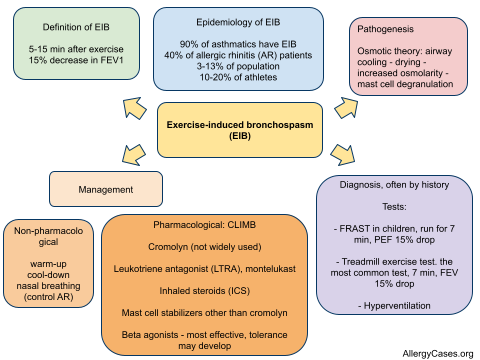
Please note that FDEIA is different from exercise-induced bronchospasm (EIB) (click to enlarge the image):
References
Food-Dependent Exercise-Induced Anaphylaxis-Importance of Omega-5 Gliadin and HMW-Glutenin as Causative Antigens for Wheat-Dependent Exercise-Induced Anaphylaxis. Morita E, Matsuo H, Chinuki Y, Takahashi H, Dahlström J, Tanaka A. Allergol Int. 2009 Oct 25;58(4).
Reviewer: S. Randhawa, M.D., Allergist/Immunologist and Assistant Professor at NSU
Food-dependent exercise-induced anaphylaxis (FDEIA) is a special form of food allergy where a food-intake alone does not induce any symptoms. Anaphylaxis occurs only when triggering factors such as exercise or aspirin-intake are added after ingestion of the causative food.
Clinical features of FDEIA
In FDEIA, patients develop anaphylaxis after eating and exercising. They have no symptoms are rest.
Sequence of events: eating --> exercise --> anaphylaxis
There are two types of patients with food-dependent EIA ("generalists" and "specialists"):
- Patients who develop anaphylaxis when exercising in temporal proximity to ingestion of any
type of food ("generalists")
- Patients who develop anaphylaxis with exercise only with ingestion of a specific food ("specialists")
Foods associated with FDEIA
Wheat is the most common food associated with food-dependent exercise-induced anaphylaxis (FDEIA). Both exercise and aspirin-intake facilitate allergen absorption from the gastrointestinal tract.
80% of the patients with wheat-induced FDEIA have IgE reacting to omega-5 gliadin and the remaining of the patients to high molecular weight glutenin (HMW-glutenin).
Foods associated with FDEIA
- Wheat. Prevalence of wheat allergy in Japan is 0.2% - the assessment was based on questionnaire-based exam, skin prick test, and omega-5 gliadin sIgE (http://goo.gl/Mp4nW).
- Buckwheat
- Crustaceans
- Cephalopods
- Celery
- Chicken
- Grapes
- Tomato
- Dairy products
- Mushrooms
Management of FDEIA
Management of FDEIA
Management of food-dependent EIA includes:
- avoiding exercising in proximity to food consumption (4-6 hours)
- carrying self-injectable epinephrine (EpiPen)
- exercising with a partner
- wearing a medical alert bracelet which lists the condition FDEIA and treatment (EpiPen)
Which of the following foods is often associated with food-dependent exercise-induced anaphylaxis (FDEIA)?
(A) peanut
(B) fish
(C) wheat
(D) soy
(E) egg
(F) milk
Answer: C.
Please note that FDEIA is different from exercise-induced bronchospasm (EIB) (click to enlarge the image):
References
Food-Dependent Exercise-Induced Anaphylaxis-Importance of Omega-5 Gliadin and HMW-Glutenin as Causative Antigens for Wheat-Dependent Exercise-Induced Anaphylaxis. Morita E, Matsuo H, Chinuki Y, Takahashi H, Dahlström J, Tanaka A. Allergol Int. 2009 Oct 25;58(4).
LTP and PG2A are tomato allergens http://goo.gl/C4Hhv
Anaphylaxis guidelines by World Allergy Organization. JACI, 2011.
Key figures: New nomenclature and classification of gluten-related disorders and Algorithm for the differential diagnosis of gluten-related disorders, including celiac disease, gluten sensitivity and wheat allergy. BMC Medicine 2012.
Published: 05/09/2010
Updated: 02/09/2012
Key figures: New nomenclature and classification of gluten-related disorders and Algorithm for the differential diagnosis of gluten-related disorders, including celiac disease, gluten sensitivity and wheat allergy. BMC Medicine 2012.
Published: 05/09/2010
Updated: 02/09/2012
Pollen-Food Allergy Syndrome (PFAS) or Oral Allergy Syndrome (OAS)
Author: V. Dimov, M.D., Allergist/Immunologist and Assistant Professor at University of Chicago
Reviewer: S. Randhawa, M.D., Allergist/Immunologist and Assistant Professor at NSU
Oral allergy syndrome (OAS, pollen-food allergy syndrome) is contact urticaria of the oropharynx. OAS is caused by allergens in fruits, vegetables, tree nuts, and peanuts that are homologous to pollen allergens.
Oral allergy syndrome (OAS) occurs in patients with a prior cross-reactive aeroallergen sensitization and clinically presents with oralpharyngeal symptoms after ingestion of a triggering fruit or vegetable.
Although controversial, these symptoms may progress to systemic symptoms outside the gastrointestinal tract in 8.7% of patients and anaphylactic shock in 1.7%.
OAS's underlying pathophysiology may play a role in clinical presentation and outcome, depending on whether the cross-reactive protein is a heat-labile PR-10 protein, a partially labile profilin, or a relatively heat-stable lipid transfer protein. Profilin is an actin-binding protein involved in the restructuring of the actin cytoskeleton. It is found in all eukaryotic organisms in most cells.
PAS is caused by raw fruits or vegetables, cooked foods are well tolerated. There are a number of cross-reactive allergens in pollen and plant foods. The sequence is:
- primary respiratory sensitization to pollen
- then reaction to food ingestion
Typical cross-reactive associations:
BIRCH - Apple, peach, apricot, hazelnut, potato, carrot, celery
RAGWEED - Banana, cucumber, cantaloupe, watermelon, zucchini, cucumber
MUGWORT - Celery, onion, mustard, cabbage

Cross-reactivity in Pollen-Food Allergy Syndrome (PFAS) or Oral Allergy Syndrome (OAS) (click to enlarge the image).
Diagnosis
Diagnostic testing is variable based on the underlying food tested, but fresh food skin prick test typically has the highest sensitivity.
Treatment
Treatment centers on avoidance and the consideration of self-injectable epinephrine. Because of its relationship with a cross-reactive aeroallergen sensitization, subcutaneous immunotherapy and sublingual immunotherapy have also been therapeutically tried with mixed results.
In patients with OAS to apple, tolerance can be induced with consumption of apple - but OAS recurs on discontinuation (Allergy, 2011).
References
Oral allergy syndrome: a clinical, diagnostic, and therapeutic challenge. Webber CM, England RW. Ann Allergy Asthma Immunol. 2010 Feb;104(2):101-8; quiz 109-10, 117.
Reviewer: S. Randhawa, M.D., Allergist/Immunologist and Assistant Professor at NSU
Oral allergy syndrome (OAS, pollen-food allergy syndrome) is contact urticaria of the oropharynx. OAS is caused by allergens in fruits, vegetables, tree nuts, and peanuts that are homologous to pollen allergens.
Oral allergy syndrome (OAS) occurs in patients with a prior cross-reactive aeroallergen sensitization and clinically presents with oralpharyngeal symptoms after ingestion of a triggering fruit or vegetable.
Although controversial, these symptoms may progress to systemic symptoms outside the gastrointestinal tract in 8.7% of patients and anaphylactic shock in 1.7%.
OAS's underlying pathophysiology may play a role in clinical presentation and outcome, depending on whether the cross-reactive protein is a heat-labile PR-10 protein, a partially labile profilin, or a relatively heat-stable lipid transfer protein. Profilin is an actin-binding protein involved in the restructuring of the actin cytoskeleton. It is found in all eukaryotic organisms in most cells.
PAS is caused by raw fruits or vegetables, cooked foods are well tolerated. There are a number of cross-reactive allergens in pollen and plant foods. The sequence is:
- primary respiratory sensitization to pollen
- then reaction to food ingestion
Typical cross-reactive associations:
BIRCH - Apple, peach, apricot, hazelnut, potato, carrot, celery
RAGWEED - Banana, cucumber, cantaloupe, watermelon, zucchini, cucumber
MUGWORT - Celery, onion, mustard, cabbage
Cross-reactivity in Pollen-Food Allergy Syndrome (PFAS) or Oral Allergy Syndrome (OAS) (click to enlarge the image).
Diagnosis
Diagnostic testing is variable based on the underlying food tested, but fresh food skin prick test typically has the highest sensitivity.
Treatment
Treatment centers on avoidance and the consideration of self-injectable epinephrine. Because of its relationship with a cross-reactive aeroallergen sensitization, subcutaneous immunotherapy and sublingual immunotherapy have also been therapeutically tried with mixed results.
In patients with OAS to apple, tolerance can be induced with consumption of apple - but OAS recurs on discontinuation (Allergy, 2011).
Which allergen cross-reacts with Bet v1 (birch)?
(A) Ara h1 (peanut)
(B) Mal d 1 (apple)
(C) Ara h3 (peanut)
(D) Bos d (milk)
(E) Gal d (egg)
(F) Hev b2 (latex)
Answer: B, apple. Pollen sensitizations linked to food allergies was first reported with birch pollen and apples 50 years ago.
For patients:
Do raw or fresh fruits leave you sneezing, sniffling and with an itchy mouth, lips and throat? You may have oral allergy syndrome.
Oral allergy syndrome: a clinical, diagnostic, and therapeutic challenge. Webber CM, England RW. Ann Allergy Asthma Immunol. 2010 Feb;104(2):101-8; quiz 109-10, 117.
Interactive Allergy Map by Greer Labs. Click your state to find region-specific, common airborne allergens there.
Profilin may be a pan-allergen among plants that crossreacts between pollen, fruits, vegetables and latex http://goo.gl/ZUPRQ
Cross Reactions Among Foods (PDF).
Birch-Apple Syndrome Treated with Birch Pollen Immunotherapy (Oral Allergy Syndrome) http://goo.gl/4cASx
Related reading
Oral symptoms from the ingestion of food in a patient with allergic rhinitis - AAAAI Ask the Expert, 2011.
In birch-apple syndrome (oral allergy syndrome), eating apple does not affect the respiratory tract. Annals of Allergy, Asthma and Immunology, 2011.
Published: 05/09/2010
Updated: 12/21/2012
Related reading
Oral symptoms from the ingestion of food in a patient with allergic rhinitis - AAAAI Ask the Expert, 2011.
In birch-apple syndrome (oral allergy syndrome), eating apple does not affect the respiratory tract. Annals of Allergy, Asthma and Immunology, 2011.
Updated: 12/21/2012
Allergic reaction after consumption of "meat-free chicken” (Quorn mycoprotein) by a patient with mold allergy
Authors: M. Sandhu, M.D., Allergist/Immunologist; R. Hopp, D.O., Allergist/Immunologist
Reviewer: V. Dimov, M.D., Allergist/Immunologist and Assistant Professor at University of Chicago
A 14-year old African American male had a suspected allergic reaction while eating “meat-free chicken” and a vegetable stir fry. The allergic reaction manifested within 2-minutes as throat irritation followed by generalized pruritis, difficulty breathing, lip, tongue, eye and laryngeal edema.
The reaction required an emergency room visit and overnight hospitalization. While in the hospital, he received 2 doses of subcutaneous epinephrine, intravenous corticosteoids (methylprednisolone, Solu-Medrol), H1- blocker (diphenhydramine, Benadryl) and H-2 blocker (famotidine, Pepcid). After 24 hours of observation, he was discharged.
The patient presented to the allergy clinic two months after the allergic reaction. He and his mother were uncertain of the contents of the stir fry. He did recall sampling the “meat-free chicken”.
Past medical history (PMH)
Negative.
Medications
None.
Physical examination
Stable vital signs (VSS).
Skin: no rashes, keratosis, excoriations, or lichenifications.
HEENT: normal. Eyes had no conjunctival injection or swelling, ears had no fluid or inflammation behind the TMs, nose had no mucosal edema or discharge.
Chest: clear to auscultation bilaterally (CTA (B)).
CVS: Clear S1S2.
Abdomen: Soft, non-tender, non-distended with normal bowel sounds (NT, ND, +BS).
Extremities: no cyanosis, clubbing or edema (c/c/e).
What diagnostic tests would you suggest?
Immediate type hypersensitivity skin tests to commercial food allergens (Hollstier Stier 1:20) demonstrated a negative reaction to soy and +1 positive reactions to corn and eggs.
What happened?
The patient's mother was asked to bring the product he ate during the follow-up appointment in one week.
The patient returned the following week with the product. It was a meatless, soy-free mycoprotein with egg binder. A skin test to the mycoprotein (100 mg in 2 ml normal saline) produced a 30 x 20 mm wheal and 100 x 100 mm flare (positive reaction).
Skin testing to molds was positive, including Fusarium vasinfectum, Alternaria tenuis, and to a lesser extent Aspergillus fumigatus. The Fusarium reaction was particularly "aggressive" with a 10 x 12mm wheal and 40 x 40mm flare with pseudopod formation.
Final diagnosis
Type I Hypersensitivity Reaction to Ingestion of Mycoprotein in a Patient With Mold Allergy.
Mycoprotein is a food made by continuous fermentation of the fungus, Fusarium venenatum (fungal family, fusarium genus). The fungus is grown in a large fermentation tower to which oxygen, nitrogen, glucose, minerals and vitamins are added. After harvesting, the fungus is heat treated to reduce its RNA content to the WHO recommended levels before being filtered and drained. The resulting sheet of fungal mycelia is mixed with egg albumin which acts as a binder. The mycoprotein is then textured to resemble meat.
Summary
Mycoprotein is marketed as Quorn. Quorn may be purchased as chunks, mince, sausages, burgers, fillets and is found in a wide array of frozen ready meals such as pies, curries and casseroles. In the United kingdom it enjoys around 60% of the meat-replacement food market, with annual sales of around £95 million. Mycoprotein was introduced in the USA in 2002. Approximately 1/140 000 consumers report adverse reactions after eating Quorn. Few case reports have been published describing the type I hypersensitivity reaction of ingested mycoprotein. Crossreactivity studies have shown that mycoprotein shares common allergenic determinants with molds such as Aspergillus fumigatus, Cladosporium herbarum, Alternaria alternate. The most likely allergenic determinant is the 60S ribosomal protein P2, which was identified as allergen Fus c 1 from Fusarium culmorum.
Related reading
Anaphylaxis to ingested molds in a mold-allergic patient. AAAAI, 2011.
Type I Hypersensitivity Reaction to Ingestion of Mycoprotein (Quorn) in a Patient With Mold Allergy. Manbir Singh Sandhu M.D., Russell J. Hopp D.O., FAAAAI, FAAP. Pediatric Asthma, Allergy & Immunology. March 2009, 22(1): 5-6. doi:10.1089/pai.2008.0518.
'Quorn' Meat Substitute Raises Allergy Concern. WSJ, 2011.
Infectious Fungus Common In Household Drains (Fusarium) - NPR, 2011. "Meatless chicken" (Quorn) is made of Fusarium.
Published: 03/19/2010
Updated: 11/30/2011
Comments from Twitter
@sarahjchapman: well isnt it mold anyway? its black slime made in vats, skimmed and bleached anyway, often has egg white added. Isn't it a mold so has links to mold allergy? i suppose its a new type of food to go into the food supply. I have heard that there are no pictures on net of it 'growing' as its so disgusting. we avoid mainly due to egg allergy as well. Obviously egg allergy more common, but can grasp idea of a up and coming new allergen in form of quorn.
@AllergyNet: Valuable case. New to me. Just checked, Quorn launched in Australia last year.
@DrVes: WSJ interviewed me last week about allergy to Quorn (different from corn) - see the report here: goo.gl/XcIJO - It was published by 2 of my colleagues, UpToDate now quotes it in the section about quorn allergy - very few reports so far. Apparently the Quorn label does not mention anything about mold allergy... http://goo.gl/SKwUc
@sarahjchapman: it wouldn't , apart from allergy wouldnt mention the 'mold' aspect in case it put off consumers. I wonder how many people have had cross reactive reaction to quorn and not connected reaction to it?
@IgECPD4: It's not quite the same thing but I had a patient with anaphylaxis to quinoa--a "new" gluten free grain from South America.
@scanman: I wonder how long it will be before this meat substitute 'vegetarian' fungus based Quorn is available in India
@scanman: I wonder how long it will be before this meat substitute 'vegetarian' fungus based Quorn is available in India
Eosinophilic gastrointestinal disorder (EGID)
Author: S. Randhawa, M.D., Allergist/Immunologist and Assistant Professor at LSU (Shreveport) Department of Allergy and Immunology
Reviewer: V. Dimov, M.D., Allergist/Immunologist and Assistant Professor at University of Chicago
A 3-year old Caucasian boy with h/o severe anemia (hemoglobin 6 mg/dL) and hemoccult positive stools was admitted to the hospital. He was previously admitted 6 months ago with hemoglobin (Hb) 1.9 mg/dL, transfused, and a GI endoscopy showed a colonic polyp. The patient was started on iron therapy and the Hb improved but was never normal. According to the mother, he had no symptoms of bleeding. The patient’s stool has been black since he was started on iron.
Medications
Iron syrup.
Family and social history
Non contributory.
Birth History: he was born at 40 week gestation without any problems. Immunizations are up-to-date. Diet: Table food. Eats everything. The patient is developmentally appropriate for age.
Physical examination
Vital signs: Temp. 98.1, HR 112 bpm, RR 6, BP 92/58 mm Hg.
Wt 13.8 Kg.
HEENT: External ears normal. Canals clear. TM's normal. Nares normal. Septum midline. Oropharynx clear. Neck: supple, no adenopathy.
CVS: RRR, normal S1/S2, no m/r/g.
Chest: CTA (B).
Abdomen: Soft, Non tender BS +ive.
Extremities: no c/c/e.
Skin: color, texture, turgor normal. No rashes or lesions.
What laboratory tests would you suggest at this point?
CBCD
CMP
ESR
Stool O & P
Stool occult blood
TSH
UA
Blood cultures
Laboratory results
CBCD
WBC – 10.8
Hb – 7.3
Hct – 26.1
MCV- 68
Platelets- 194
Neutrophils - 30%
Lymphocytes - 49%
Monocytes – 4.3%
Eosinophils – 15.9% (1730)
Basophils - 1.6% (170)
CMP
Na - 138
K - 4.2
HCO3 24
BUN 26
Cr 1.1
Bilirubin Normal
AST 22
ALT 18
Ca Normal
Glucose 114
Total Protein 4.5 (low)
Albumin 2.1 (Low)
UA
Specific gravity – 1.020
pH - 5
Protein - None
Glucose - None
Ketone - None
Bilirubin - None
Blood - None
Nitrite - Negative
Leukocyte - Negative
Urobilinogen - None
TSH – 3.6
Stool occult blood - positive
Blood cultures negative
Ova & Parasites - negative
Stool Ova & Parasite
ESR – Within normal limits
The treatment team performed additional tests listed below:
Sweat Chloride test - negative
HIV: ELISA - negative, Western Blot - negative, PCR - no RNA copies identified.
Flow cytometry – Within normal limits
Radiology tests:
CXR - Within normal limits
CT Chest - Within normal limits.
CT abdomen - Within normal limits except for 1.7 cm intraluminal defect seen in the proximal jejunum without bowl dilatation.
Diagnostic procedures performed:
Sputum cytology - Within normal limits.
Pulmonary function testing - Within normal limits.
Upper Endoscopy – Showed signs of inflammation in esophagus, stomach and proximal deudenum. Biopsies were taken which showed an abundance of eosinophils (more than 50 per hpf) in the submucosa.
Colonoscopy - Showed patchy inflammation in the colon. Biopsies showed an infiltration of eosinophils in the submucosa.
Serological testing:
ANA – Negative
RA - Negative
RAST to food allergens:
Chicken - Class 0/1
Egg Class - 2
Fish Class - 0
Milk Class - 2
Soybean Class - 0
Wheat Class - 2
Thyroid antibodies
Anti thyroglobulin Ab – Negative
Anti peroxidase Ab – Negative
Anti microsomal Ab - Negative
Immunoglobulins
Total IgG - Within normal limits
IgG Subclasses (IgG1-4) – Within normal limits
Total IgA - Within normal limits
Total IgM – Within normal limits
Total IgE - 73
Food allergen skin testing - negative to Almond, Apple, Banana, Beef, Celery, Coconut, Corn, Cottonseed, Egg, Fish, Lobster, Milk, Pecan, Pea nut, Soybean, Shrimp, Walnut, Wheat.
DTH
Tetanus – Normal Response
PPD - Normal Response
Trichophyton - Normal Response
Candida - Normal Response
Delayed-type hypersensitivity (DTH) response
The standardized DTH test includes Candida, tetanus, mumps, and TB. Trichophyton is also commonly used. However, the only FDA-approved reagents for DTH are PPD, Candida and mumps.
Final Diagnosis
Eosinophilic gastrointestinal disorder (EGID).
What happened next?
The patient was advised to avoid wheat, eggs and cow's milk. He was started on Prevacid 30 mg po daily, prednisone syrup 1mg/ml, 5ml po daily for 4 weeks and advised to continue the iron syrup.
At follow-up, the patient's CBC showed Hb 12.3 mg/dL, Hct 38.9, eosinophils 2% (186). Steroids were tapered off and oral fluticasone was started. A follow-up EGD was scheduled in 6 months.
Summary
Primary eosinophilic gastrointestinal disorders are defined as disorders that selectively affect the gastrointestinal tract with eosinophil-rich inflammation in the absence of known causes for eosinophilia (eg, drug reactions, parasitic infections, and malignancy).
These disorders include eosinophilic esophagitis, eosinophilic gastritis, eosinophilic gastroenteritis, eosinophilic enteritis, and eosinophilic colitis and are occurring with increasing frequency.
References
Eosinophilic gastrointestinal disorders (EGID). Rothenberg ME. Eosinophilic gastrointestinal disorders (EGID).
Eosinophilic Gastroenteritis. eMedicine Specialties > Gastroenterology > Intestine. eMedicine, 2009.
Published: 12/07/2009
Updated: 09/07/2010
Food Allergy
 Editor: V. Dimov, M.D., Allergist/Immunologist and Assistant Professor at University of Chicago
Information For Patients
How to use Auvi-Q or EpiPen (video)
Food allergy (video)
Action plan for food allergy
Food allergy handouts by the Food Allergy & Anaphylaxis Network (FAAN)
Food Allergy: An Overview for Patients by NIH (PDF)
Guide to Parenting a Child with Food Allergies by KFA (PDF)
Allergy Testing
Hives (urticaria) and angioedema
Eczema or atopic dermatitis
Food Allergy (AAAAI)
Are you food allergy aware - Ana & Phil Axis (Coloring book, PDF)
Celiac Disease - JAMA Patient Page (PDF)
8 foods cause 90% of food allergies (click to enlarge the image). The likelihood of a negative oral food challenge is shown in relation to the respective values of skin prick test (SPT) and serum IgE (sIgE):
Allergic (atopic) march (click here to enlarge the image):
What to expect when visiting an allergy clinic
Current allergy skin tests are virtually painless. This video by Dr. Bassett, a board-certified allergist from New York City, shows what to expect when visiting an allergy clinic for diagnosis and treatment:
Information For Doctors
Food Allergy: Teaching Cases
Food Allergy in a Toddler
Egg Allergy and MMR Immunization
Intolerance to Monosodium Glutamate (MSG)
When to Attempt a Food Challenge in Tree Nut Allergy?
Hives with consumption of coconut cookie on two occasions - is it food allergy or not?
Diagnostic Workup for Fennel Allergy
Allergic reaction after consumption of "meat-free chicken” (mycoprotein) by a patient with mold allergy
Reactions to multiple foods due to oral allergy syndrome rather than food allergy
Allergy to pomegranate (Punica granatum)
Almond allergy? No, it’s allergy to cockroach-contaminated chocolate-covered almonds
Eosinophilic Esophagitis
Eosinophilic Esophagitis: Brief Review
Right Lower Quadrant Pain due to Eosinophilc Eosophagitis
Eosinophilic gastrointestinal disorder (EGID)
Eosinophilic Esophagitis. Ronald S. Siegel, M.D. UCLA, Department of Medicine, 2007.
Eosinophilic Gastroenteritis. Daniel Cole, M.D., M.P.H. UCLA, Department of Medicine, 2007.
Related Reading
Food Allergy: Brief Review
Food Allergen Avoidance
Food Challenges for Diagnosis of Food Allergy
Food allergy. Allergy, Asthma & Clinical Immunology 2011, 7(Suppl 1):S7.
Simplified algorithm for the diagnosis and management of food allergy. Allergy, Asthma & Clinical Immunology 2011 7(Suppl 1):S7.
Food allergy - 2012 international consensus (ICON) statement in JACI.
Types of adverse reactions to food - a figure from the Food Allergy Guidelines in JACI, 2010.
Food Allergy Education for the Newly Diagnosed Pediatruc Patient - part 1 and 2 (free full text) http://buff.ly/1l5hBmp and http://buff.ly/1l5hJ5w
Wheat Allergy
Mind Maps: Food Allergy
Mnemonics: Food Allergy
Blog articles from AllergyNotes
Video
News Video: Living with Food Allergies. AllergyNotes.
Image source: Wikipedia, GNU Free Documentation License.
Published: 07/06/2007
Updated: 03/15/2014
Subscribe to:
Posts (Atom)