Showing posts with label Procedures. Show all posts

Venom immunotherapy (VIT)

Author: V. Dimov, M.D., Allergist/Immunologist and Assistant Professor at University of Chicago
Reviewer: S. Randhawa, M.D., Allergist/Immunologist and Assistant Professor at LSU (Shreveport) Department of Allergy and Immunology

Allergen immunotherapy was introduced by Leonard Noon 100 years ago and is the only disease-modifying treatment for allergic individuals (Allergy, 2012).


Mechanisms of allergen-specific immunotherapy (click to enlarge the image).

Extracts

Allergen (venom) vaccine is the recommended term for the therapeutic agent used in allergen immunotherapy. "Vaccine" is used when the therapeutic use of the preparation is
clear. "Extract" is used when the non-therapeutic aspects of the allergen preparation are discussed.

Extracts of honeybee, yellow jacket, white-faced hornet, yellow hornet, and wasp venom are available for skin testing and VIT.

There is no venom extract for fire ant hypersensitivity but a whole-body extract is available.

Tests

Skin prick tests with a concentration in the range of 1.0 to 100 mcg/mL may be performed before intracutaneous (intradermal) tests but are not used by all allergists.

Intracutaneous tests start with a concentration in the range of 0.001 to 0.01 mcg/mL. If
intracutaneous test results at this concentration are negative, the concentration is increased by 10-fold increments until a positive skin test response occurs or a maximum concentration of 1.0 mcg/ mL is reached.

A positive intradermal skin test to insect venom at a concentration of 1.0
mcg/mL or lower is indicative of specific IgE antibodies.

Skin testing with fire ant whole-body extract is indicative of specific IgE antibodies if a positive response occurs at a concentration of 1:100 wt/vol or less by prick method, or 1:1000 wt/vol or less by intradermal method.

If the skin test is negative despite a convincing history of anaphylaxis after
an insect sting, in vitro testing for IgE antibodies or repeat skin testing is recommended.

Venon immunotherapy (VIT)

30-60% of patients with a history of anaphylaxis from an insect sting who have venom-specific IgE antibodies (skin or in vitro testing) will experience a systemic reaction when stung again.

VIT is not necessary in children 16 years of age and younger who have experienced isolated
cutaneous systemic reactions without other systemic manifestations. They only have a 10% chance of having a systemic reaction if stung again, and if one occurs, it is unlikely to be worse
than the initial isolated cutaneous reaction.

VIT in adults who have experienced only cutaneous systemic reaction is controversial but usually recommended.

VIT is extremely effective in reducing the risk of systemic reaction to less than 5%, and sting reactions that occur during VIT are usually milder.

VIT is generally not necessary for patients who have had only a large local reaction because the risk of a systemic reaction is low.

The vast majority of patients who have had a large local reaction do not need to be tested for specific IgE.

How do you define a large local reaction to insect sting?

- increase in size for 24 to 48 hours,
- swelling to more than 10 cm in diameter
- 5 to 10 days to resolve

Patients who have experienced large local reactions often have large local
reactions to subsequent stings, and up to 10% might eventually have a systemic reaction.

What is the difference between a large local reaction and a systemic cutaneous reaction?

Systemic reactions can include a spectrum of manifestations ranging from mild to life-threatening:

- cutaneous reactions (eg, urticaria and angioedema),
- bronchospasm
- large airway obstruction (tongue or throat swelling, laryngeal edema)
- hypotension and shock.

The key feature that distinguishes a systemic cutaneous reaction from a large local reaction is the involvement of parts of the body not contiguous with the site of the sting.

What is the dose of VIT?

VIT injections start weekly, beginning with doses no greater than 0.1 to 1.0 mcg, and increasing to a maintenance dose of 100 mcg of each venom (e.g., 1 mL of a vaccine containing 100 mcg/mL of venom).

The dosage schedule for fire ant immunotherapy is less well defined. A maintenance dose
is 0.5 mL of a 1:100 wt/vol concentration.

The interval between maintenance dose injections can be increased to 4-week intervals during the first year of VIT and to every 6 to 8 weeks during subsequent years.

How long to continue VIT?

VIT should be continued for at least 3 to 5 years. Despite the persistence of a positive skin test response, 80-90% of patients will not have a systemic reaction to an insect sting if VIT is stopped after 3 to 5 years.

Some patients with a history of severe anaphylaxis with shock or loss of consciousness still might be at continued risk for a systemic reaction if VIT is stopped, even after
5 years of immunotherapy.

Patients who have experienced a systemic reaction carry injectable epinephrine (eg, EpiPenTM or TwinJectTM devices) at all times.

Patients who take beta-blocker are at greater risk for anaphylaxis to VIT or a sting. Patients who have stinging insect hypersensitivity should not be prescribed beta-blockers unless absolutely necessary.

References

Stinging Insect Hypersensitivity: A Practice parameter Update. Joint Council of Allergy, Asthma, and Immunology.
Hymenoptera Venom Immunotherapy. Medscape review, 2011.
Stinging Insect Guidelines - 2001 Update by AAAAI and ACAAI. Medscape, 2011.

Published: 10/12/2009
Updated: 06/12/2011

How to Write a Subcutaneous Immunotherapy (SCIT) Prescription for Allergic Rhinitis

Author: V. Dimov, M.D., Allergist/Immunologist and Assistant Professor at University of Chicago
Reviewer: S. Randhawa, M.D., Allergist/Immunologist and Assistant Professor at LSU (Shreveport) Department of Allergy and Immunology

A 33-year-old AAM is referred to the allergy clinic for symptoms of allergic rhinitis and conjunctivitis. He complains of itchy watery eyes, itchy nose and nasal congestion. These symptoms occur all year but are worse in the spring and summer. He has tried intranasal steroids (INS) and oral antihistamines but does not get a lasting symptom relief and his sleep is impaired. No history of nasal polyps, eczema, food allergies, or systemic reactions to stinging insects.

Past medical history (PMH)

Allergic rhinitis and conjunctivitis.

Medications

Fluticasone (Flonase) 50 mcg/actuation nasal spray QHS, loratidine 10 mg po daily.

Social history (SH)

No tobacco or alcohol use.

Environmental history

Pets in the home: 2 dogs. Flooring: Wall-to-wall carpeting. Air conditioning: Central air. Heating: Forced hot air. Basement: Dry basement. Dust mite controls: Dust mite controls are not in place. Tobacco smoke: no exposure in the home.

Family history (FH)

Mother with asthma and allergic rhinitis. Sister with allergic rhinitis.

Physical examination

VSS
HEENT: External ears normal. Canals clear. TM's normal. Nares normal. Septum midline. Congested pale mucosa, no polyps seen. No drainage or sinus tenderness. Lips, tongue normal. Oropharynx clear.
Neck: supple, no adenopathy
CVS: RRR, normal S1/S2, no m/r/g
Chest: CTA (B)
Extremities: no c/c/e
Skin: color, texture, turgor normal. No rashes or lesions.

What is the most likely diagnosis?

Allergic rhinitis and conjunctivitis.

What tests would you order?

Skin prick test.

What happened?


Figure 1. Skin prick test results (click to enlarge).

The allergen skin test was extremely positive with multiple pseudopods described by the nurse as "pseudopods on pseudopods."

The patient developed conjunctival itching and redness, nasal congestion and discharge during the skin prick test which required administration of epinephrine 0.3 mg IM, loratidine 10 mg and prednisone 40 mg po. His symptoms resolved withing 15 minutes. A second dose of prednisone was prescribed for the next day.

Final diagnosis

Allergic rhinitis and conjunctivitis.

What treatment options would you suggest for long-term control of his symptoms?

Subcutaneous immunotherapy (SCIT).

Risks and benefits of subcutaneous immunotherapy (SCIT) for allergic rhinitis were discussed and the patient opted to start therapy.

How would you write a prescription for SCIT?


Figure 2. SCIT Instructions (click to enlarge).

Please see the SCIT instructions above. Multiallergic patiens may need 3 vials of mixed immunotherapy extracts labeled A, B and C.

Please see the table for protease activity in the SCIT instructions above. High protease activity extracts cannot mix with the low protease activity extracts because they degrade them. For example, mold and dust mite extracts can only be mixed together (and with ragweed). Ragweed extract can be mixed with all other extracts.

You must have in mind the total volume of each vial when writing a SCIT prescription. In this case, the total volume of each vial is 5 ml. The extracts can be mixed up to 5 ml in each vial. The rest of the volume is made up with diluent.

You can use a Microsoft Excel Spreadsheet or similar software to calculate the sum of the volumes for different extracts and the volume of diluent needed.


Figure 3. SCIT prescription. (click to enlarge).

You need figures 1, 2 and 3 in front of you when writing a prescription for each patient.

Figure 1 (skin prick test) determines what will be put in the mix.
Figure 2 (reminder "cheat sheet") determines how the extracts will be mixed in each vial.
Figure 3 is the actual SCIT prescription.

It is advisable to have all three figures in front of you when writing SCIT prescriptions, at least initially.

Let's look at vial A. Our patient is allergic to almost all allergens tested. We will mix in vial A the following allergens:

- Grass Mix #7, 0.4 ml
- Bermuda, 0.5 ml
- Creighton Tree Mix (or local mix for the particular area), 1.5 ml
- Short Ragweed 1.0 ml

The amount of diluent needed to constitute the vial to a total of 5 ml is 0.3 ml.

Let's look at vial B. We will mix in vial B the following allergens (all with high protease activity):

- Mite Mix, 0.3 ml
- Cockroach, 0.5 ml
- Mold Mix AHP, 2.0 ml
- Minor Mold Mix, 2.0 ml

All the allergens above have high protease activity and can be mixed together. They should not be mixed with low protease activity extracts.

Mixing allergen extracts with high protease content

Mnemonic

M
Mold
Mite - cockroach has even more proteases than mite
Mixing problems - proteases degarade grass extracts in particular and decrease their potency

The amount of diluent needed to constitute the vial to a total of 5 ml is 0.2 ml.

Let's look at vial C. We will mix in vial C the following allergens:

- Cat Hair, 2.0 ml
- Dog Hair, 2.0 ml

Cat and dog hair require relatively larger volumes (2 ml each) compared to other allergens. Therefore, relatively fewer allergens are mixed in vial C.

The amount of diluent needed to constitute the vial to a total of 5 ml is 1.0 ml.

When a patient is "multiallergic," the goal should be to maximize the dose of extracts for which we have the best evidence for effectiveness: grass, ragweed and dust mite. Allergen immunotherapy with dog hair is generally less effective than the one with cat hair.

It is difficult for children to tolerate 3 SCIT injection, therefore every effort should be made to combine the extracts in 1-2 vials.

What is the starting dose of SCIT?

The patient had a hypersensitivity reaction during the skin prick testing, therefore we decided to start with the lowest dose listed in figure 3 at a dilution of 1:10,000. The dose will be administered weekly.


Vials A, B and C - mixed.

What are the 4 standardized allergen extracts?

(A) Dog
(B) Trees
(C) Cat
(D) Molds
(E) Dust Mite
(F) Grass
(G) Ragweed

The 4 standardized extracts are Cat, Dust Mite, Grass and Ragweed.

Allergen immunotherapy was introduced by Leonard Noon 100 years ago and is the only disease-modifying treatment for allergic individuals (Allergy, 2012). Allergists should provide an EpiPen prescriptions to all patients on SCIT.

References

Allergen immunotherapy: A practice parameter second update. JACI, 2007 (PDF).
Allergen Immunotherapy. AFP, 2004.
Allergy Immunotherapy for Primary Care Physicians. J . Stokes , T . Casale. The American Journal of Medicine , Volume 119 , Issue 10 , Pages 820 - 823 (2006). Link via MDConsult.
Position Statement on the Administration of Immunotherapy Outside of the Prescribing Allergist Facility. ACAAI.
Allergen injection immunotherapy. John M Weiner. MJA 2006; 185 (4): 234.
Use of Immunotherapy in a Primary Care Office. AFP, 1998.
Advances in upper airway diseases and allergen immunotherapy in 2007. Saltoun C, Avila PC. J Allergy Clin Immunol. 2008 Aug 9.
Sublingual Immunotherapy. Anthony J. Frew. NEJM, Volume 358:2259-2264, May 22, 2008.
Talking Points on Sublingual Immunotherapy (SLIT) for Physicians Practicing in the United States. ACAAI.
SCIT ("allergy shots") is at least as potent as pharmacotherapy in controlling the symptoms of allergic rhintis as early as the first season of therapy. JACI, 2011.
Allergen immunotherapy practice in the United States: guidelines, measures, and outcomes (2011) http://goo.gl/xHYjG

Video

Immunotherapy Rx, Part 1 and 2, Jay Portnoy, MD. Conferences Online For Allergy, Children's Mercy Hospitals & Clinics, 2009.
Immunotherapy. Linda Cox, MD. Conferences Online For Allergy, Children's Mercy Hospitals & Clinics, Feb 4, 2009.
Allergy shots by Dr. Y. Patel.

Patient Information

What is immunotherapy and how does it work? AAAAI, 2006.

Published: 02/24/2009
Updated: 09/26/2011

Procedure Guide: Punch Biopsy of the Skin

Author: V. Dimov, M.D., Allergist/Immunologist and Assistant Professor at University of Chicago
Reviewer: S. Randhawa, M.D., Allergist/Immunologist and Assistant Professor at LSU (Shreveport) Department of Allergy and Immunology

1. Get to know the equipment in the standard skin biopsy kit.

2. Explain the procedure to the patient and obtain a written informed consent. Explain the risks, benefits and alternatives (RBA). Always tell the patient that a small scar will remain at the site of the biopsy. Explain what is going on while performing the procedure, this will alleviate both the patient's anxiety and yours.

3. Get the skin biopsy kit at the bedside. You can briefly explain to the patient what the different parts of kit are used for.

4. Mark the area of the skin biopsy with a pen. Mark a circular area (5 mm) on the edge between healthy and diseased skin. Divide the circle in two. One half will be sent for microscopy, the other half for immunofluorescence.

5. Disinfect the area with Betadine (povidone-iodine (PVPI) in a circular fashion from the center out.

6. Draw lidocaine with a large bore needle. Change the needle to in insulin needle (or 30G) and bend it at 45 degrees. Inject lidocaine below the marked area to produce a wealth with a diameter of 2 cm. Wait 1-2 minutes for the lidocaine to take effect.

7. Take the punch biopsy device and apply pressure while rotating it from side to side. Lift the device and remove the biopsied skin specimen (usually the size of a pencil eraser).

8. Stop the bleeding by applying pressure with a 4x4 gauze.

9. The lines of least skin tension are determined. The wound has an elliptical shape that can be closed with sutures parallel to the lines of least skin tension. Apply 1-2 sutures at the biopsy site.

10. Cut the skin biopsy specimen in half along the marked line. Ensure that each half contains both health and diseases skin (as marked). One half is sent for microscopy, the other half for immunofluorescence. Complete the required paperwork and enclose it with the 2 containers. Transport in bio hazard bags.

11. Inform the patient to return to the clinic in one week to remove the suture(s). The patient should keep the area of the biopsy dry for 48 hours.

Disclaimer

The material and/or content on this web site are for informational purposes only. Users of the web site should not act upon any information received from this site without seeking professional consultation.

References

Punch Biopsy of the Skin. AFP, 2002.
The Skin Punch Biopsy. J. M. Blakeman. Can Fam Physician. 1983 May; 29: 971–974.

Patient Information

Punch Biopsy of the Skin. AFP, 2002.
Skin lesion biopsy. U.S. National Library of Medicine, 2008.

Video


Shave and Punch Skin Biopsies. Two techniques for skin biopsies. Created at University of Calgary.


The Punch Biopsy. DermEducation.


Video: Suturing Workshop by University of Wisconsin Department of Family Medicine

Related reading

Suturing. CETL Learning, Queen Mary University of London.
Shave and punch biopsy for skin lesions. Am Fam Physician. 2011 Nov 1;84(9):995-1002.

Published: 02/24/2009
Updated: 03/04/2011

Anaphylactic Reaction to Subcutaneous Immunotherapy in a Patient with Asthma: How Do You Change the Dose?

Author: V. Dimov, M.D., Allergist/Immunologist and Assistant Professor at University of Chicago
Reviewer: S. Randhawa, M.D., Allergist/Immunologist and Assistant Professor at LSU (Shreveport) Department of Allergy and Immunology

A 16-year-old CF is on a maintenance dose of subcutaneous immunotherapy (SCIT) for allergic rhinitis and asthma. She receives the injections by in her primary care physician office in a different town and the allergy clinic prepares the mixtures. The immunotherapy prescription consists of trees, grasses, dust mite, cat, dog and cockroach. She has been on a maintenance dose (injections given every 3 weeks) for 1.5 years and has had several episodes of large local reaction. Three dose ago, she had an URI with mild fever but still went for her "allergy shot." There was a new nurse who administered the injection "higher than usual" in the area of the deltoid muscle. Within 2-3 minutes, she developed shortness of breath, wheezing and desaturation in the 80s. She was treated with an EpiPen, prednisone, loratidine and albuterol inhalation. Her condition improved and after an evaluation in th ED, she was discharged home.

Past medical history (PMH)

Allergic rhinitis and conjunctivitis, asthma.

Medications

Flovent 110 mcg INH bid, Fluticasone (Flonase) 50 mcg/actuation nasal spray QHS, loratidine 10 mg po daily.

Social history (SH)

No tobacco or alcohol use.

Family history (FH)

Mother with asthma and allergic rhinitis.

Physical examination

Normal.

What is the most likely diagnosis?

Anaphylactic reaction to SCIT.

What is the most likely reason for the anaphylactic reaction?

Patients with asthma are at higher risk for fatal anaphylactic reactions. Virus infections and febrile conditions create and inflammatory evnironment that could have contributed to her anaphylactic reaction. The injection in the area of the deltoid muscle could be inadvertently administered IM instead of SC, especially of the personnel is inexperienced.

How would you change the SCIT dose?

She currently receives 0.4 ml of the 1:1 dilution. SCIT dose was decreased by "two dilutions" - to 0.4 ml of dilution 1:100.

She was advised to receive the next SCIT dose in our office and to consider receiving the following doses at an allergy clinic in her home town rather than at her PCP's office.

Final diagnosis

Anaphylcatic reaction to SCIT.

What are the 4 standardized allergen extracts?

(A) Dog
(B) Trees
(C) Cat
(D) Molds
(E) Dust Mite
(F) Grass
(G) Ragweed

The 4 standardized extracts are Cat, Dust Mite, Grass and Ragweed.

References

Allergen immunotherapy: A practice parameter second update. JACI, 2007 (PDF).
Allergen Immunotherapy. AFP, 2004.
Allergy Immunotherapy for Primary Care Physicians. J . Stokes , T . Casale. The American Journal of Medicine , Volume 119 , Issue 10 , Pages 820 - 823 (2006). Link via MDConsult.
Position Statement on the Administration of Immunotherapy Outside of the Prescribing Allergist Facility. ACAAI.
Allergen injection immunotherapy. John M Weiner. MJA 2006; 185 (4): 234.
Use of Immunotherapy in a Primary Care Office. AFP, 1998.
Advances in upper airway diseases and allergen immunotherapy in 2007. Saltoun C, Avila PC. J Allergy Clin Immunol. 2008 Aug 9.
Sublingual Immunotherapy. Anthony J. Frew. NEJM, Volume 358:2259-2264, May 22, 2008.
Treatment of anaphylactic reactions due to immunotherapy. AAAAI - Ask the Expert, 2011.

Published: 03/20/2009
Updated: 01/20/2011

Procedure Guide: Spirometry

Author: V. Dimov, M.D., Allergist/Immunologist and Assistant Professor at University of Chicago
Reviewer: S. Randhawa, M.D., Allergist/Immunologist and Assistant Professor at NSU

Calibrate the device

The spirometry device should be calibrated with a 3-liter syringe every day the device is used. Three different volumes are used and a calibration log is kept on site. The calibration is done at the beginning of the day and is not repeated with each patient.

Prepare the software

Most office spirometers consist of a mouthpiece (with a disposable end) which connects to a desktop or laptop computer with a printer.

A simple spirometry system is provided by Occupational Health Dynamics/KoKo.

For KoKo systems, click "new patient."

Enter the patient data in the computer. Normal values are calculated based on age, gender, race and height. Weight is not used in most nomograms. A commonly used nomogram is Hanes III.

For KoKo systems, click "new test series." A set of pink dots will appear on the right side of the screen. Those pink dots represent the predicted values for a particular patient and a useful visual guide during the maneuver.

Explain the procedure to the patient, for example:

"You have to blow in as hard as you can initially and go on for 6 seconds. It is not easy to do and will try several of them. Then, we will pick the best 3 attempts. It will take about 5-10 minutes"

During the test

For KoKo systems, a press of the keyboard space bar activates the test. The bottom of the screen turns red ("prepare"), the then black and this is the time to start the test. A patient should be encouraged to achieve a rapid forceful expiration ("blast!") and to continue for at least 6 seconds (" go-go-go-go" or "keep going, keep going, keep going").

It helps to do a trial attempt initially so that a patient can get comfortable with the device and procedure.

The FVCs of different attempts have to be within 100 ml of each other to satisfy the reproducibility criteria.


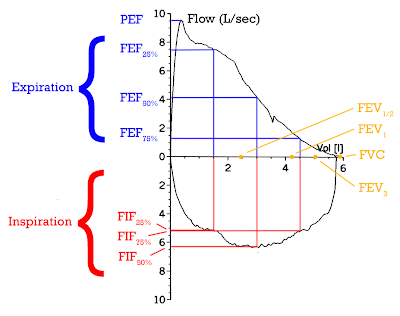
Flow-Volume loop showing successful FVC maneuver. Positive values represent expiration, negative values represent inspiration. The trace moves clockwise for expiration followed by inspiration. Note the FEV1, FEV1/2 and FEV3 values are arbitrary in this graph and just shown for illustrative purposes, they must be recorded as part of the experiment. Image source: Spirometry, from Wikipedia, the free encyclopedia, GNU Free Documentation License.

After the test

For KoKo systems, choose "save attempts" to complete the test, then print the results.

References

Spirometry Training Guide. National Institute for Occupational Safety and Health, CDC.
An Approach to Interpreting Spirometry. AFP, 2004.
When should a methacholine challenge be ordered for a patient with suspected asthma? (PDF file). CCJM, 01/2008.
APDIM E-Learning Task Force: Cardiac Auscultation, Chest X-Rays, Electrocardiograms, Patient Images (Dermatology), Pulmonary Function Tests, 2009.
Spirometry. Johns Hopkins University.
Spirometry in Primary Care. PowerPoint presentation.
OHD KoKo Spirometers.
Something Old, Something New: Spirometry and Exhaled Nitric Acid as Biomarkers of Airflow Obstruction http://goo.gl/xpX1x
Pulmonary Function Testing. Cleveland Clinic Disease Management Online Textbook.
Assessing Lung Function - a Must in Asthma Therapy http://bit.ly/HBWj7I
ERS Educational Videos of Medical Procedures http://buff.ly/1lz8ITD

Video

What is spirometry? A simple breathing test (video)

Published: 10/18/2008
Updated: 03/19/2012

Procedure Guide: Subcutaneous Immunotherapy

Author: V. Dimov, M.D., Allergist/Immunologist and Assistant Professor at University of Chicago
Reviewer: S. Randhawa, M.D., Allergist/Immunologist and Assistant Professor at LSU (Shreveport) Department of Allergy and Immunology

Allergen immunotherapy was introduced by Leonard Noon 100 years ago and is the only disease-modifying treatment for allergic individuals (Allergy, 2012). The type of extracts used for subcutaneous immunotherapy depends on the reactivity to a particular allergen on the skin prick testing.


Diagram of skin prick testing


Skin test sheet. Image source: Dr. Stokes, Creighton University Division of Allergy & Immunology, used with permission.

The skin prick allergens are listed on the sheet in the order they appear in the environment during the year and can be remembered with the mnemonic:

How the allergens change during the season: mnemonic TGR MI DC/DC ("a Tiger with an MI went to DC")

"There's spring time, where you have the tree pollen. Summer time, where you have the grass pollens. And then there's the fall time when you have the weed pollen.”

This sequence is remembered by the mnemonic TGR MI DC/DC ("a Tiger with an MI went to DC").

Pollen calendar: TGR MI DC/DC

Tree pollens
Grass pollens
Ragweed and weed pollen

Mold spores
Indoor allergens - DC/DC - Dog/Cat and Dust mite/Cockroach


Pollen-producing plants (weeds and trees) in Omaha, Nebraska

References:

Characteristics of allergic sensitization among asthmatic adults older than 55 years: results from the National Health Allergy Season Year Round. WTOC-TV Savannah.
Interactive Allergy Map by Greer Labs. Click your state to find region-specific, common airborne allergens there.
‘Botanical sexism’ blamed for making life miserable for allergy sufferers as male trees fill city skies with pollen http://goo.gl/cx5tH


Immunotherapy Preparation. Image source: Dr. Stokes, Creighton University Division of Allergy & Immunology, used with permission.

Molds include AAHP (Alternaria, Aspergillus, Hormodendrum, Penicillium) and Minor Mold Mix.

Many patients require 2 vials of extracts. Each vial contains 10 ml of extract solution. If the total amount of allergen extract is less than 10 ml, the rest of vial is filled with diluent to a total of 10 ml.

Animal extracts (cat, dog) are not mixed with "other animals" such as cockroach, mite, molds. Molds include AAHP (Alternaria, Aspergillus, Hormodendrum, Penicillium) and Minor Mold Mix.


Immunotherapy order sheet. Image source: Dr. Stokes, Creighton University Division of Allergy & Immunology, used with permission.

Mixing allergen extracts with high protease content

Mnemonic

M
Mold
Mite - cockroach has even more proteases than mite
Mixing problems - proteases degarade grass extracts in particular and decrease their potency

Sublingual immunotherapy

Sublingual immunotherapy induces similar immunologic alterations as subcutaneous immunotherapy, although to a lesser degree.

Omalizumab

The combination of omalizumab with allergen subcutaneous immunotherapy can enhance clinical efficacy.

Oral Immunotherapy

Sublingual immunotherapy induces similar immunologic alterations as subcutaneous immunotherapy, although to a lesser degree.

Currently the only product approved for clinical use by European regulators is a tablet containing timothy grass extract. There are no products approved for oral immunotherapy in the US.

Optimal duration of sublingual therapy is not defined. The NEJM published a review of SLIT in 2008.

What are the 4 standardized allergen extracts?

(A) Dog
(B) Trees
(C) Cat
(D) Molds
(E) Dust Mite
(F) Grass
(G) Ragweed

The 4 standardized extracts are Cat, Dust Mite, Grass and Ragweed.

References

Allergen immunotherapy: A practice parameter second update. JACI, 2007 (PDF).
Allergen Immunotherapy. AFP, 2004.
Allergy Immunotherapy for Primary Care Physicians. J . Stokes , T . Casale. The American Journal of Medicine , Volume 119 , Issue 10 , Pages 820 - 823 (2006). Link via MDConsult.
Position Statement on the Administration of Immunotherapy Outside of the Prescribing Allergist Facility. ACAAI.
Allergen injection immunotherapy. John M Weiner. MJA 2006; 185 (4): 234.
Use of Immunotherapy in a Primary Care Office. AFP, 1998.
Advances in upper airway diseases and allergen immunotherapy in 2007. Saltoun C, Avila PC. J Allergy Clin Immunol. 2008 Aug 9.
Sublingual Immunotherapy. Anthony J. Frew. NEJM, Volume 358:2259-2264, May 22, 2008.
Allergen-Specific Immunotherapy of Allergy and Asthma: Current and Future Trends. François Spertini; Christophe Reymond; Annette Leimgruber. Expert Review of Respiratory Medicine, Medscape, 03/2009.

Video

Immunotherapy Rx, Part 1 and 2, Jay Portnoy, MD. Conferences Online For Allergy, Children's Mercy Hospitals & Clinics, 2009.
Immunotherapy. Linda Cox, MD. Conferences Online For Allergy, Children's Mercy Hospitals & Clinics, Feb 4, 2009.
Allergy shots by Dr. Y. Patel.

Patient Information

What is immunotherapy and how does it work? AAAAI, 2006.

Published: 07/03/2008
Updated: 08/15/2010

Procedure Guide: Allergy Skin Prick Testing

Author: V. Dimov, M.D., Allergist/Immunologist and Assistant Professor at University of Chicago
Reviewer: S. Randhawa, M.D., Allergist/Immunologist and Assistant Professor at NSU

When clinicians use the history and physical examination alone in evaluating possible allergic disease, the accuracy of their diagnoses rarely exceeds 50% (CCJM 2011).

History

History of Allergy: in 1869, to investigate his own hay fever, Charles Blakely performed the first skin test. Historically, skin prick testing (SPT) was done with a single lancet which was wiped out between the application of different allergens. This technique is no longer used. Another obsolete skin testing technique is scratch testing.

Training Video: ComforTen® Multiple Skin Test System

This video introduction to the ComforTen® Multiple Skin Test System will educate you on the proper use of HollisterStier Allergy's Skin Test Device.


Before the Test

Explain the procedure to the patient and obtain an informed consent. Verify that the patient has been off antihistamines for at least 14 days and off beta-blockers for at least 1 day. Skin prick testing (SPT) on beta-blockers was safe in 199 patients in a 2012 study (http://goo.gl/3vGSl). However, incidence of systemic reactions is 1:250 with SPT.

Allergy skin prick testing (SPT) is relatively contraindicated in patients with asthma or COPD with FEV1 of less than 50% of predicted, and in patients with uncompensated CHF or CAD. Such high risk patients have little reserve to compensate for acute respiratory failure or hemodynamic instability which can occur in case of anaphylaxis.

SPT is not done in pregnancy.

SPT can be done with a 25-26 G needle aligned at a 45 degree angle to the the skin, with a bevel pointing upwards. In practice however, the most commonly used SPT devices are prepackaged kits.

What to expect when visiting an allergy clinic

Current allergy skin tests are virtually painless. This video by Dr. Bassett, a board-certified allergist from New York City, shows what to expect when visiting an allergy clinic for diagnosis and treatment:


From ACAAI online allergy lectures (COLA): This is a documentary about a workshop designed to teach and assess the ability of allergy/Immunology fellows to perform allergy skin tests. Held on April 20, 2012.


During the Test

Clean the skin with alcohol swabs.

Warn the patient that he/she may feel some mild pain during the procedure.

Prepare the Quintest (R) kit (PDF brochure). Arrange the handles (8, with 5 pricks each) so that the "Quintest" logo faces you. Press each handle firmly in the skin. See the ComforTen (R) brochure for correct application (PDF brochure).


Quintest device

There should be a 2 finger-breadths-distance (30 mm) between:
- the 5 pricks on each handle (set by manufacturer)
- the sides of the body and the pricks
- the spine and the pricks
- each series of 5 pricks

Do not press the allergen pricks near or over bones, e.g. scapulae or spine. The intensity of allergic reaction is lower over body prominences.


Diagram of skin prick testing

Label the pricks with lines and numbers, for example.

1_ --
__--
__--
__--
5_--

Each line points to a skin prick. Each number points to a number of allergen. In most patients, we use 8 Quintest (R) handles with 40 skin pricks (allergens): 1-5, 6-10, 11-15, 16-20, 21-25, 26-30, 31-35, 36-40.

Allergen 1 is the negative control (normal saline) which should be negative (no wheal or flare). Allergen 2 is the positive control (histamine) which should be positive (both wheal and flare). Allergens 36-40 are usually the domestic or so called "perennial" allergens (house dust mite, cockroach, feathers, etc).

Place a control for dermatographia near the spine by scratching the letter "A" with a sharp object (spatula).

Use the 15 minutes needed to complete ("read") the test to ask additional questions and offer explanation and reassurance to the patient.

In patient with severe dermatographia, the allergy skin testing cannot be done due to a false positive reaction. In such patients, a short course of Prednisone 40 mg po daily for 5 days can be tried to diminish the nonspecific mast cell response. Short-term systemic steroids (30 mg daily for 1 week) do not have a significant suppressive effect on true positive skin tests. If dermatographia cannot be controlled with steroids, ImmunoCAP testing may be indicated.

Chronic steroid use (higher than 20 mg daily) can partially suppress SPT reactions. Potent topical steroids (cream, ointment) may suppress SPT reactions and therefore should be stopped 2-3 weeks prior to testing. Topical steroids doe no not inhibit the release of mediators from the mast cells but decrease the number of mast cells in the skin. Oral steroids do not normally affect allergy prick or intradermal tests. http://buff.ly/VkptPi

How to "Read" the Test

After 15 minutes, measure and record the size of wheal (papule) and flare (erythema) in millimeters for each allergen prick (1-40). Time limits on reading percutaneous allergy tests: 30 minutes (40 minutes if consistent with the history) http://bit.ly/1htAQyF

Prick 1 (normal saline) should be negative. Prick 2 (histamine) should be positive.

You can press on the wheal/flare to blanch the erythema so that the size of the wheal (papule) can be recorder correctly.


Skin prick testing on the left side of the back shows a negative control (1), a positive control (2) and multiple positive tests to trees and grass (3-20).

Examples of 4+ reactions include:
- a wheal with pseudopod
- a wheal with a satellite (considered more severe than a pseudopod)


A wheal with multiple pseudopods and a satellite lesion in the upper left. Image source: Modified from Sakurako Kitsa's photostream, Flickr (used with the author's permission).


Skin test sheet. Image source: Dr. Stokes, Creighton University Division of Allergy & Immunology, used with permission.

How do you measure the size of a wheal?
Measure the largest diameter, then the one at 90 degrees to the largest diameter for example, 10 x 7 mm.

What is a Positive Test?

A positive skin test reaction is defined as a wheal 3 mm greater in diameter than the negative control reaction (not the positive control), accompanied by surrounding flare (erythema).

After the Test

Monitor for signs of anaphylaxis. If the patient complains of runny nose, facial itching or SOB, those may be early signs of anaphylaxis, and treatment with EpiPen should be considered.

If local itching at the site of the allergen pricks is very troublesome to the patient, a steroid cream or spray can be prescribed. A dose of oral antihistamine can also be given.

Intradermal Test (ID)

ID testing has a higher sensitivity (but a lower specificity) than SPT. ID testing is not done on the back because a tourniquet cannot be placed there in case of anaphylactic reaction. Intradermal skin tests should be placed a minimum of 5 cm (approximately 2 inches) apart.

Allergen doses used for ID testing are 100 to 1,000 times less potent than the ones used for SPT. Codeine was used historically as a positive control instead of histamine but proved too expensive to use.

ID testing is not done with food allergens. ID testing is preferred in venom and penicillin allergy.

I
Insects
Intradermal tesing


Comparison of diagnostic methods for peanut, egg, and milk allergy - skin prick test (SPT) vs. specific IgE (sIgE) (click to see the spreadsheet). Sensitivity of blood allergy testing is 25-30% lower than that of skin testing, based on comparative studies (CCJM 2011).

Skin prick test vs. serum IgE

Skin testing correlates better with nasal allergen challenge (the gold standard) than blood testing for the diagnosis of inhalant allergy. According to current guidelines, skin tests are the preferred method for diagnosing IgE-mediated sensitivity to inhalants (CCJM 2011).

References

Practical guide to skin prick tests in allergy to aeroallergens (free full text). Allergy, 2011.
Pearls and Pitfalls of Allergen Testing - JCAAI http://goo.gl/6ThcC and http://goo.gl/Bfnhn
Allergy Testing. AFP, 2002.
Clinical review: ABC of allergies. Diagnosing allergy. BMJ 1998;316:686.
Techniques for skin tests. Adkinson: Middleton's Allergy: Principles and Practice, 6th ed.
Tips to Remember: What is allergy testing? AAAAI.
Allergy Testing. ACAAI.
Video: Allergy tests. Mayo Clinic.
QUINTEST's self-contained, self-loading system, PDF brochure.
The skin prick test - European standards (free full text review, 2013) http://buff.ly/WOyPY4

Related information


Do systemic steroids affect allergy skin test results? No. AAAAI Ask The Expert, 2010.
Allergy testing by Dr. Y Patel.
Phadia Announces FDA Clearance of ImmunoCAP Rapid - "first point-of-care test" to assist in the diagnosis of allergy 
Patient feels she has experienced "an inaccurate allergy skin test": http://bit.ly/aJTR1P
Seroquel and other antipsychotics with antihistamine activity afect immediate hypersensitivity skin tests. AAAAI, 2011.
Allergen skin reactivity in the elderly population: allergen-induced wheal sizes does not decrease with age http://goo.gl/iUtpq
Skin-prick testing for cat allergy has 100% sensitivity and 93.5% specificity - intradermal testing did not add value. ACAAI, 2011.
Allergy testing in a primary care office? AAAAI Ask the Expert, 2011.
Skin prick testing (SPT) on beta-blockers was safe in 199 patients in a 2012 study (http://goo.gl/3vGSl). However, incidence of systemic reactions is 1:250 with SPT.
Evaluation of a skin test device designed to be less painful - MultiTest PC ("Pain Control") http://buff.ly/YzXFg0
Ethyl-chloride spray prevents itching secondary to allergy skin test, without masking the results http://buff.ly/1EFsQ0v

Images

Allergy skin prick testing described as "stabbing in the back" by a Flickr user.

Disclaimer The material and/or content on this web site are for informational purposes only. Users of the web site should not act upon any information received from this site without seeking professional consultation.

Published: 07/03/2008
Updated: 11/26/2012

Anaphylactic reaction to subcutaneous immunotherapy: what to do?

Author: V. Dimov, M.D., Allergist/Immunologist and Assistant Professor at University of Chicago
Reviewer: S. Randhawa, M.D., Allergist/Immunologist and Assistant Professor at NSU

A 31-year-old Caucasian male has been on subcutaneous immunotherapy for allergic rhinitis for 3 months. The subcutaneous immunotherapy (SCIT) consists of 3 injections with extracts of grasses, trees, weeds (vial A), dust mite, molds (vial B), cat and ragweed (vial C). His maintenance dose goal is 0.5 ml.

The SCIT dose was gradually increased with weekly injections and the dose he received last week was 0.3 ml. The patient reports large local reactions which started at the level of 0.1 ml and increased progressively as the dose increased to 0.2 ml.

During the last visit, the size of the local reaction was 30 x 30 mm in terms of swelling. He has no history of prior systemic reactions to SCIT.

Past medical history (PMH)

Allergic rhinitis. He has a remote history of mild asthma, which has been asymptomatic for years and he used only occasionally a prn albuterol inhaler in the remote past.

Medications

Benadryl PRN, Flonase (fluticasone) nasal spray daily

What happened?

The patient received three injections of immunotherapy today at 10:50 and within two to three minutes of the injection, he started to complain of feeling that his throat was closing, dry cough and itchy eyes. He was evaluated immediately by the nurses and his allergist.

What is the most likely diagnosis?

He was found to have an anaphylactic reaction to the subcutaneous immunotherapy.

What treatment would you suggest?

He was given a dose of epineprine 0.3 mg IM at 10:51 and Alavert 10 mg po dissolvable tablet at 10:52. At that time, his blood pressure was 140/55, heart rate was 112, and his pulse-oximetry was 93% on room air.

At 11:00, he was given 40 mg of prednisone po x 1.

What happened next?

The patient reported that his throat sensation was better; however, his pulse-oximetry was noted to be in the range of 90% and on physical examination, he developed diffuse bilateral expiratory wheezing. The physical examination was also remarkable for conjunctival injection and development of swelling around the injection site on both arms with large, local reaction in the range of 8 to 9 cm on the left arm with wheals and satellite wheals around the injection sites.

What treatment would you suggest next?

He was treated with albuterol four puffs at 11:15. At 11:20, he reported improvement in his throat sensation and shortness of breath. His pulse-oximetry was 96%; blood pressure was 130/80.

At 11:30, the patient reportedly returned to baseline in terms of his symptoms. On physical examination, he had no more wheezing.

He was given a prescription for prednisone 40 mg po daily for three days and loratadine 10 mg po daily for seven days.

How would you change the immunotherapy prescription?

His dose of immunotherapy was returned to the dose two steps before the current one, which was 0.1 ml and he is to stay on this dose for two months.

The patient was discharged from the clinic at 12:50, two hours after the event. He is on prednisone, which should prevent any symptoms of late reaction.

Final diagnosis

Anaphylactic reaction to subcutaneous immunotherapy

Summary


Anaphylaxis mind map diagram.

Allergen immunotherapy was introduced by Leonard Noon 100 years ago and is the only disease-modifying treatment for allergic individuals (Allergy, 2012).

During a retrospective chart review of 388 patients, the rate of systemic reactions during subcutaneous immunotherapy was 0.28% per injection and 7.4% per patient. It was concerning that 48% of the systemic reactions occurred more than 30 minutes after the injection and many of these reactions required epinephrine.

This study was unable to identify risk factors that predict the reactions. Gender, phase (build-up versus maintenance), asthma, angiotensin-converting enzyme inhibitors, beta-blockers, initial skin-prick test size, or allergen type did not increase the odds of a systemic reaction.

Skin prick testing (SPT) on beta-blockers was safe in 199 patients in a 2012 study (http://goo.gl/3vGSl). However, incidence of systemic reactions is 1:250 with SPT.

Mnemonics for anaphylaxis

Clinical features of anaphylaxis: S ECG

Skin, 90%

Expiratory wheezing and other respiratory symptoms, 70%
Cardiovascular, 40%
GI and oral, 24%

Risk factors for anaphylaxis due to immunotherapy include: OH BEA

Observation - insufficient, following injection
High allergen dose

Beta-blockers
Errors in administration
Asthma, poorly controlled

Drugs for acute management of anaphylaxis: EASI

E
pinephrine IM
Antihistamines PO, IM
Steroids PO, IM, IV
Inhaled b2-agonists, if wheezing. IV fluids if hypotension

Epinephrine (adrenaline) is the first-line the treatment of anaphylaxis. Adult intramuscular dose is 0.3 to 0.5 ml of 1:1,000 concentration. This should be given in the lateral aspect of the thigh by intramuscular injection. The dose can be repeated every 5 to 15 minutes, depending upon the response, for 3-4 doses. The same is true for children except the dose is 0.01 mg per kg (AAAAI Ask the Expert, 2012).

What are the 4 standardized allergen extracts?

(A) Dog
(B) Trees
(C) Cat
(D) Molds
(E) Dust Mite
(F) Grass
(G) Ragweed

The 4 standardized extracts are Cat, Dust Mite, Grass and Ragweed.

References

Allergen immunotherapy safety: Characterizing systemic reactions and identifying risk factors. Rank, Mathew A.; Oslie, Corrine L.; Krogman, Jennifer L.; Park, Miguel A.; Li, James T. Allergy and Asthma Proceedings, Volume 29, Number 4, 7/8 2008 , pp. 400-405(6).
Evaluation of near-fatal reactions to allergen immunotherapy injections. Amin HS, Liss GM, Bernstein DI. J Allergy Clin Immunol. 2006 Jan;117(1):169-75.
Anaphylactic reactions during immunotherapy. Rezvani M, Bernstein DI. Immunol Allergy Clin North Am. 2007 May;27(2):295-307, viii.
Allergen immunotherapy: A practice parameter second update. JACI, 2007 (PDF).
Anaphylaxis: A Short Review
Rate of systemic reactions during subcutaneous immunotherapy: 0.28% per injection
Mnemonics: Anaphylaxis
Mind Maps: Anaphylaxis
Anaphylaxis guidelines by World Allergy Organization. JACI, 2011.

Published: 02/12/2009
Updated: 06/12/2012